Top 10 Supercomputer Cooling Solutions for Global Buyers
Supercomputer Cooling has become a strategic engineering priority as global buyers deploy systems for artificial intelligence, climate modeling, medical research, and national laboratories. Modern accelerators can release intense heat through compact racks, creating thermal challenges that traditional air conditioning cannot solve alone. A small temperature imbalance may reduce performance, increase fan energy, or shorten component life.
Dr. Bruno Michel, an IBM researcher known for advanced thermal management, once stated, “Cooling is the key enabler for the next generation of computing.” His observation remains highly relevant. Efficient cooling now influences processor density, facility design, operating costs, and system reliability. The best solution depends on workload intensity, rack power, water availability, maintenance skills, and regional climate. There is no universal winner.
This guide examines ten Supercomputer Cooling solutions for global buyers, including chilled-air systems, rear-door heat exchangers, direct-to-chip liquid cooling, immersion cooling, and hybrid designs. Each option is assessed through practical criteria: thermal performance, energy efficiency, installation complexity, scalability, service requirements, and environmental impact. Real facilities rarely match laboratory conditions. Dust appears. Pumps fail. Budgets change.
That reality deserves attention.
A technically impressive system may still disappoint when spare parts arrive slowly or operators lack liquid-cooling experience. Buyers should therefore compare measured performance, not attractive specifications alone. Independent testing, clear warranty terms, and documented maintenance procedures matter. Some conclusions remain imperfect because cooling performance changes with workload and site conditions. Yet careful evaluation can prevent expensive mistakes and support dependable supercomputing growth.
Supercomputer Cooling: Purpose, Requirements, and Key Performance Factors
Supercomputer cooling removes heat before silicon throttles, fails, or ages prematurely. The requirement is demanding: dense processors can release hundreds of watts through a small package. Air cooling often struggles as rack density rises. Direct liquid cooling offers better heat transfer and shorter thermal paths.
The International Energy Agency’s Energy and AI report estimates that data centers used about 415 TWh of electricity in 2024. Cooling may consume 7% to over 30% of facility electricity, depending on efficiency and climate. Uptime Institute’s 2024 Global Data Center Survey reported an average power usage effectiveness of 1.56. These figures make cooling design an energy decision, not merely a maintenance issue.
Performance depends on inlet temperature, flow stability, heat exchanger effectiveness, leak control, and service access. ASHRAE guidance commonly places recommended air temperatures around 18–27°C. Liquid systems need careful water-quality monitoring and compatible materials. Small leaks matter. A practical design should tolerate pump failure, clogged filters, and sudden workload changes. Yet no solution fits every site. Liquid cooling can reduce fan energy, but it adds plumbing complexity and technician training. I have seen specifications focus heavily on peak thermal capacity while overlooking partial-load efficiency. That gap deserves more scrutiny. Teams should test real workloads, measure rack-level temperatures, and compare energy use at several operating points before selecting among the top cooling approaches.
Liquid, Air, and Hybrid Cooling Technologies Compared
Top 10 Supercomputer Cooling Solutions for Global Buyers
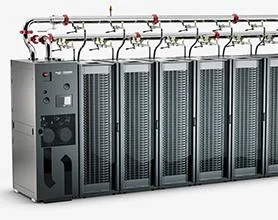
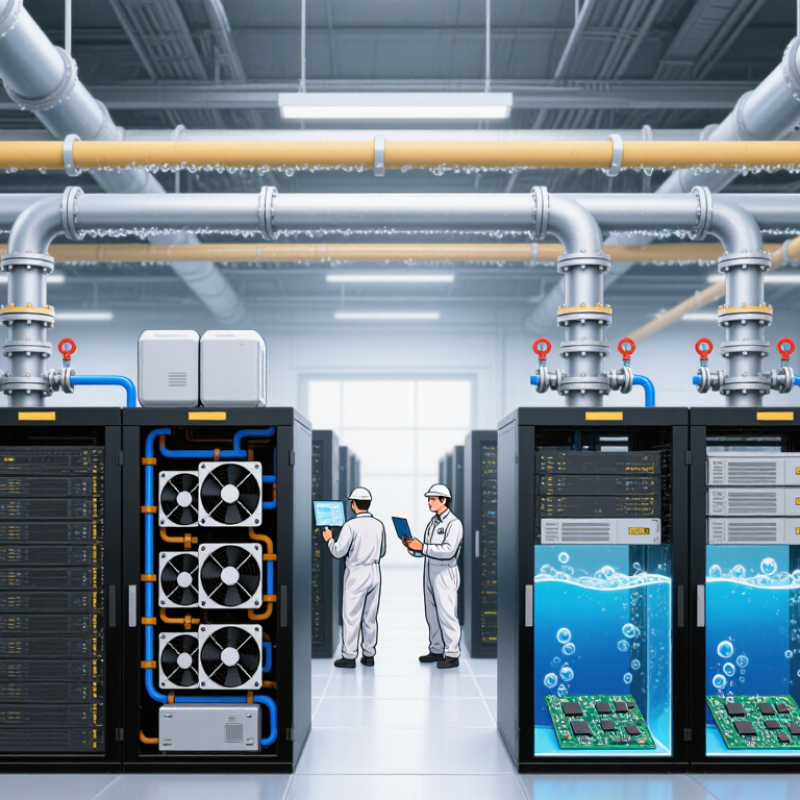
Supercomputer cooling is no longer a single-choice engineering problem. Liquid, air, and hybrid systems handle heat in different ways. The ten practical options include chilled air, free-air cooling, evaporative cooling, rear-door heat exchangers, cold-plate liquid cooling, direct-to-chip cooling, single-phase immersion, two-phase immersion, liquid-air hybrids, and facility water-loop systems.
Air cooling remains familiar and easier to maintain. It suits moderate-density racks, especially where water access is limited. However, fans consume substantial power, and hot spots can develop around processors.
Rear-door heat exchangers improve air systems by removing heat near the rack outlet. They need careful airflow balancing.
Liquid cooling performs better as processor density rises. Cold plates transfer heat directly from chips through a controlled coolant circuit. Immersion cooling surrounds hardware with engineered fluid, reducing fan use and room noise.
Two-phase designs can remove intense heat, but fluid management and service procedures become more demanding. Small leaks can create serious downtime.
Hybrid cooling combines liquid cooling for processors with air cooling for memory, storage, and power components. It often offers a practical upgrade path for existing data centers.
Buyers should compare water quality, pump redundancy, maintenance access, acoustic limits, and local climate conditions. Testing under real workloads matters more than brochure efficiency. Some designs look excellent on paper but disappoint during partial-load operation. Mistakes still happen, especially when teams underestimate filtration and technician training.
Top Cooling Solutions for Different Supercomputer Environments
Top 10 Supercomputer Cooling Solutions for Global Buyers
Top Cooling Solutions for Different Supercomputer Environments
Air cooling remains practical for moderate-density clusters and existing data rooms. It is familiar, serviceable, and easy to inspect. Hot-aisle containment keeps exhaust air away from server intakes. Cold-aisle containment supports stable inlet temperatures. Rear-door heat exchangers remove heat near the rack, reducing room-level airflow. In dusty or space-limited facilities, filtered airflow and close temperature monitoring become essential. Small errors matter.
Direct-to-chip liquid cooling suits processors producing intense heat. Cold plates transfer heat through a controlled coolant loop. This approach can reduce fan power and improve rack density. Warm-water systems may operate efficiently without mechanical chillers in suitable climates. However, pipe joints require careful inspection. A minor leak can interrupt valuable computing time. Quick-disconnect fittings, drip sensors, and isolation valves improve operational confidence.
Immersion cooling places electronic components inside a dielectric fluid. It can support dense deployments and quieter operation. Single-phase immersion simplifies fluid circulation. Two-phase immersion may remove heat efficiently, but maintenance demands specialized procedures. Hybrid cooling combines liquid treatment for processors with air cooling for memory and power equipment. Chilled-water plants remain useful for very large installations, while dry coolers reduce water dependence in arid regions. Modular cooling units fit temporary or expandable sites. Edge supercomputing environments may need compact rear-door systems and independent controls. High-altitude facilities require careful airflow calculations because thinner air reduces fan performance. Buyers should verify thermal maps, coolant compatibility, service access, and local environmental limits before selecting a design. No solution is perfect. The overlooked maintenance detail often decides reliability.
How to Evaluate Energy Efficiency, Reliability, and Maintenance Needs
Top 10 Supercomputer Cooling Solutions for Global Buyers
A cooling solution should be judged by measured performance, not attractive specifications. Track power usage effectiveness, cooling capacity, inlet temperature, and water consumption during peak workloads. Liquid cooling can support dense processors, while air systems may simplify access and retrofitting. Rear-door heat exchangers can reduce room heat without redesigning every rack. The right choice depends on server density, climate, and facility limits.
Reliability requires evidence from operating sites. Ask for temperature logs, pump failure data, alarm records, and emergency procedures. A useful test includes a sudden workload increase, partial airflow loss, and power recovery. Watch how quickly temperatures stabilize. Even a short delay can affect sensitive computing jobs. Redundant pumps, isolated cooling loops, and clear sensor placement improve resilience, but every added component creates another maintenance task.
Maintenance needs should be visible before installation. Check filter replacement intervals, coolant quality testing, leak detection, drain access, and technician training requirements. Keep spare seals, valves, and sensors nearby. During one assessment, our checklist focused heavily on energy savings and overlooked service clearance behind the racks. That mistake was avoidable. Energy efficiency also changes over time, especially when filters clog or pumps operate below their design range. Review monthly data, inspect unusual temperature patterns, and question results that seem too perfect.
Global Purchasing Considerations: Cost, Compatibility, and Supplier Support
Global buyers comparing the top ten supercomputer cooling solutions should begin with total cost, not purchase price.
Direct-to-chip systems, rear-door heat exchangers, immersion units, and advanced air cooling carry different installation demands. A low-cost unit may require new pumps, pipework, sensors, or stronger floor support. Those hidden expenses can exceed the equipment invoice. Energy use matters too. A cooling system running continuously can reshape operating budgets within one year.
Compatibility requires careful technical checking.
Confirm rack dimensions, coolant chemistry, flow rate, pressure limits, and heat-load capacity. A 60-kilowatt rack needs different protection than a 15-kilowatt rack. Check cold-plate contact, manifold connections, leak detection, and control-system protocols. Existing servers may need modified heat sinks or sealed components. Small mismatches create large delays. The lowest bid can look clever. It may not stay clever.
Supplier support often determines whether a project performs reliably after installation.
Request commissioning procedures, maintenance intervals, spare-pump availability, and emergency response times. Local technicians can reduce costly waiting, especially when a facility operates across time zones. Ask for measured performance data, not only laboratory claims. Clear drawings and operator training also matter. In one evaluation, documentation was incomplete, and the installation team lost several days. That weakness was easy to overlook. Buyers should also test the system under peak load before accepting it.