-
PRODUCTS & SERVICESOptimized cooling solutions for modern data centersProducts & ServicesOptimized cooling solutions for modern data centers
-
CAPABILITIESAdvancing liquid cooling technologiesCapabilitiesAdvancing liquid cooling technologies
-
TechnologiesLiquid Cooling InnovationTechnologiesLiquid Cooling Innovation
-
RESOURCESLatest News & InformationResourcesLatest News & Information
-
ABOUTOur history, leadership and ownershipAboutOur history, leadership and ownership
-
CONTACTFacility locations and global operational footprint







2026 Best Server Cooling Solutions for Global Buyers
Choosing the right Server Cooling Solutions has become a business-critical decision for global data center buyers. Modern racks can exceed 30 kilowatts, while artificial intelligence systems may demand far more. A small cooling mistake can raise inlet temperatures, trigger thermal throttling, and shorten equipment life.
Roger R. Schmidt, a distinguished data center cooling engineer and former IBM researcher, once noted, “Air cooling is reaching its limits as heat densities increase.” His observation remains highly relevant. Traditional computer room air conditioning still works well in many facilities. However, it may struggle beside dense GPU racks, narrow aisles, and uneven airflow.
This 2026 guide examines air cooling, rear-door heat exchangers, direct-to-chip liquid cooling, and immersion systems. It considers efficiency, installation complexity, maintenance access, water consumption, and long-term operating costs. Global buyers also need to examine local climate conditions, energy prices, technician availability, and applicable safety standards.
The details matter. A blocked perforated tile can create a dangerous hot spot. A poorly sealed cable opening can weaken containment. A leaking liquid loop can stop more than one server.
No solution is perfect.
Liquid cooling can improve efficiency, yet it requires trained maintenance teams and careful fluid management. Air systems remain familiar, but their capacity may be overestimated. That assumption deserves scrutiny.
Reliable selection should combine engineering calculations, manufacturer documentation, site testing, and independent verification. This article offers a practical comparison for buyers seeking resilient, efficient, and scalable cooling infrastructure in 2026.
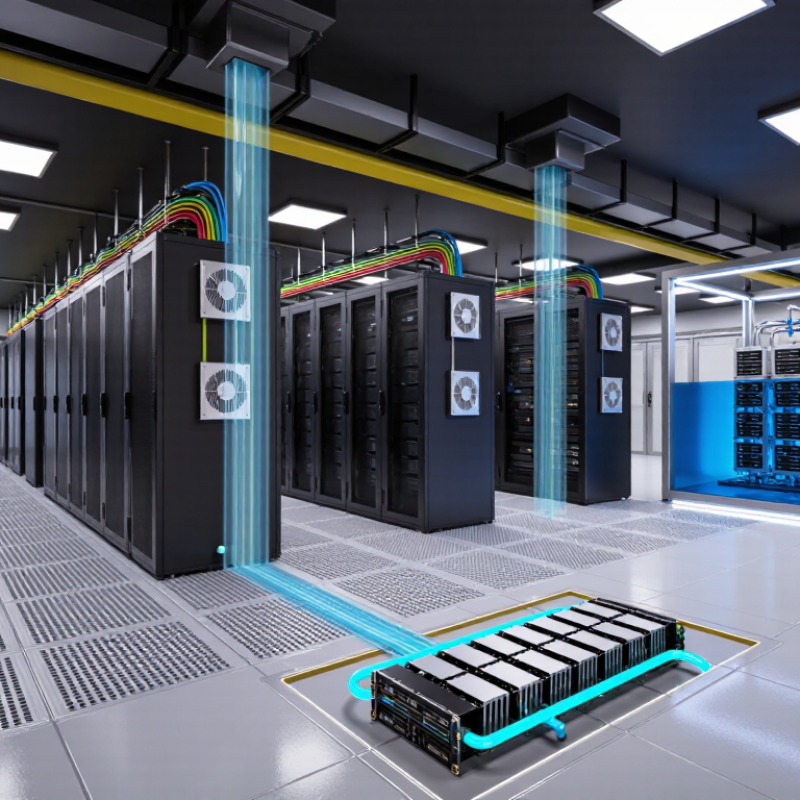
Table of Contents
[Hide]
Server Cooling Fundamentals and 2026 Market Requirements
Server cooling in 2026 begins with heat, airflow, and operating risk. Modern processors can create concentrated thermal zones inside one rack. Air cooling remains practical for moderate densities, but liquid cooling becomes more relevant as compute intensity rises. ASHRAE TC 9.9 recommends an inlet temperature range near 18–27°C for common data-center classes.
However, temperature alone is not enough. Poor airflow separation can create hot spots beside a cool room sensor. Field commissioning often reveals this gap.
The IEA’s Electricity 2024 report estimates that data centers used about 415 TWh globally in 2024. It projects demand could reach approximately 945 TWh by 2030. Cooling efficiency therefore affects both operating cost and grid pressure. The Uptime Institute Global Data Center Survey 2024 also identifies power availability as a major operational concern. In 2026, buyers should examine cooling capacity, water use, redundancy, maintenance access, and controls together. A single efficiency target is rarely enough. That assumption deserves challenge.
Tips:
Measure rack inlet temperatures, not only room temperatures. Use computational fluid dynamics before major layout changes. Require clear performance data at partial load. Check whether pumps, fans, and controls can operate during maintenance. Review local water restrictions before selecting evaporative systems. Small gaps matter. Real conditions are messier.
Related Posts
-
Top 10 Supercomputer Cooling Solutions for Global Buyers
-
Top 10 Cooling Distribution Units for Efficient Data Center Use?
-
China Top 10 Rack Level Cooling Manufacturers?
-
2026 How to Optimize High Density Server Cooling Solutions?
-
China Top 10 High Performance Computing Cooling Suppliers
-
How to Choose AI Infrastructure Cooling Solutions?