-
PRODUCTS & SERVICESOptimized cooling solutions for modern data centersProducts & ServicesOptimized cooling solutions for modern data centers
-
CAPABILITIESAdvancing liquid cooling technologiesCapabilitiesAdvancing liquid cooling technologies
-
TechnologiesLiquid Cooling InnovationTechnologiesLiquid Cooling Innovation
-
RESOURCESLatest News & InformationResourcesLatest News & Information
-
ABOUTOur history, leadership and ownershipAboutOur history, leadership and ownership
-
CONTACTFacility locations and global operational footprint

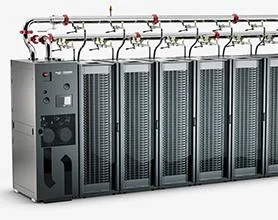





China Best Enterprise Computing Infrastructure Suppliers?
China’s enterprise technology market is expanding from conventional servers toward AI-ready, hybrid, and energy-conscious platforms. For buyers, Enterprise Computing Infrastructure now includes compute, storage, networking, virtualization, cybersecurity, and lifecycle services. The choice is broader than a product comparison.
IDC’s China Quarterly Server Tracker shows sustained competition among domestic and multinational vendors, while its China AI infrastructure research highlights growing demand for accelerated computing. Huawei, Inspur, Lenovo, H3C, and Sugon frequently appear in enterprise infrastructure discussions, but market visibility does not automatically prove suitability. Gartner’s research on infrastructure and operations also emphasizes workload fit, resilience, operational maturity, and total cost of ownership. Evidence beats slogans.
A reliable supplier review should examine benchmark performance, supply continuity, technical support, software compatibility, and deployment experience. It should also test practical details: rack density, cooling requirements, backup recovery time, and firmware update procedures. A two-minute recovery claim means little without documented testing. Synergy Research Group’s cloud and data-center analyses further show how infrastructure demand is shifting toward scalable, specialized platforms. That trend matters for Chinese enterprises managing private clouds, regional data centers, and AI workloads.
Still, no supplier is best for every organization. Some comparisons overvalue hardware specifications and understate service quality. That is a weakness worth acknowledging. Procurement teams should request verifiable case studies, independent certifications, transparent service-level agreements, and five-year operating estimates. The following overview compares China’s leading suppliers through these practical and evidence-based criteria, rather than relying on brand reputation alone.
Table of Contents
[Hide]
Definition and Scope of Enterprise Computing Infrastructure
Definition and Scope of Enterprise Computing Infrastructure
Enterprise computing infrastructure is the integrated foundation that supports business applications, data, users, and daily operations. It includes servers, storage systems, networking equipment, virtualization, operating platforms, security controls, and backup facilities. The scope also covers monitoring, maintenance, technical support, power protection, and disaster recovery.
In China, evaluating enterprise computing infrastructure suppliers requires more than comparing hardware specifications. A capable supplier should understand workload patterns, data growth, uptime targets, energy limits, and regulatory expectations. Practical assessments should examine architecture design, deployment methods, service response, replacement procedures, and long-term compatibility. Documentation matters. Clear testing records and maintenance plans reveal professional discipline.
Infrastructure must fit the enterprise, not impress it. A financial system may need strict access control and rapid recovery. A manufacturing site may prioritize stable edge processing and dust-resistant equipment rooms. A growing service company may require flexible capacity instead of oversized installations. These needs can conflict.
No solution is perfect. Overdesigned systems increase cost and operational complexity. Underestimated capacity creates painful upgrades later. I would also question promises based only on performance figures. Real reliability depends on configuration, staff training, environmental conditions, and regular testing. Supplier evaluation should therefore combine technical evidence, implementation experience, transparent communication, and references from comparable projects. Short-term savings can hide long-term risks.
China Best Enterprise Computing Infrastructure Suppliers? - Definition and Scope of Enterprise Computing Infrastructure
| Infrastructure Dimension | Definition and Scope | Relevant Technologies or Standards | Typical Enterprise Data Points | Supplier Evaluation Criteria |
|---|---|---|---|---|
| Compute Systems | Physical or virtual processing resources used to run business applications, databases, analytics, and artificial intelligence workloads. | Multi-core processors, rack servers, blade systems, virtualization, container platforms, accelerator cards. | Processor cores, memory capacity, memory bandwidth, accelerator count, virtualization support, workload density. | Performance per watt, scalability, firmware management, workload compatibility, lifecycle support, and serviceability. |
| Data Storage | Systems that store operating systems, application data, backups, archives, and structured or unstructured enterprise information. | NVMe, SAS, SATA, storage area networks, network-attached storage, object storage, RAID, erasure coding. | Raw capacity, usable capacity, input/output operations per second, latency, throughput, replication factor, recovery point objective. | Data durability, expansion method, snapshot capability, encryption, backup integration, recovery performance, and total cost of ownership. |
| Enterprise Networking | Connectivity infrastructure that links users, servers, storage systems, sites, cloud environments, and operational technologies. | Ethernet, IPv4, IPv6, VLAN, routing, software-defined networking, network automation, optical transport. | Port speeds from 1 GbE to 400 GbE, latency, packet loss, switching capacity, availability, and redundancy design. | Interoperability, telemetry, automation interfaces, security controls, upgrade path, power consumption, and technical support. |
| Data Center Facilities | Physical facilities that provide power, cooling, space, cabling, fire protection, and environmental controls for information technology equipment. | Uninterruptible power systems, power distribution units, hot-aisle or cold-aisle containment, liquid cooling, environmental monitoring. | Available power in kilowatts or megawatts, rack density, power usage effectiveness, cooling capacity, redundancy level, and site availability. | Resilience design, energy efficiency, physical security, maintenance procedures, expansion capacity, and compliance documentation. |
| Cloud and Hybrid Infrastructure | A combination of on-premises infrastructure, private cloud resources, public cloud services, and connectivity between environments. | Infrastructure as a service, platform as a service, containers, orchestration, application programming interfaces, infrastructure as code. | Provisioning time, resource utilization, monthly operating cost, workload portability, service-level objectives, and data transfer volume. | Compatibility, automation, billing transparency, portability, identity integration, data residency, and exit strategy. |
| Cybersecurity Infrastructure | Technology and controls used to protect systems, data, identities, networks, and workloads from unauthorized access or disruption. | Firewalls, endpoint protection, identity and access management, encryption, security information and event management, zero-trust principles. | Detection time, response time, policy coverage, encrypted asset percentage, authentication coverage, and vulnerability remediation time. | Security certifications, threat response capability, integration support, update frequency, auditability, and data protection controls. |
| Backup and Disaster Recovery | Processes and systems that restore applications and data after hardware failure, cyber incidents, human error, or site-level disruption. | Full and incremental backup, immutable storage, replication, failover, recovery orchestration, offline copies, and disaster recovery testing. | Recovery point objective, recovery time objective, backup window, restore throughput, retention period, and test success rate. | Recoverability, ransomware resistance, cross-site support, automation, retention flexibility, testing tools, and operating cost. |
| Systems Management | Tools and processes for monitoring, configuring, updating, automating, and governing infrastructure throughout its lifecycle. | Remote management, asset inventory, application performance monitoring, configuration management, orchestration, and observability. | Monitored asset percentage, alert accuracy, mean time to repair, patch compliance, automation coverage, and capacity forecast accuracy. | Centralized visibility, open interfaces, policy management, reporting, role-based access, and integration with existing operations tools. |
| Compliance and Governance | Policies, controls, documentation, and audit processes that ensure infrastructure meets legal, regulatory, contractual, and internal requirements. | Information security management systems, business continuity management, privacy controls, logging, access reviews, and audit trails. | Audit findings, policy exceptions, control coverage, log retention period, access review frequency, and incident reporting time. | Evidence quality, regional compliance capability, documentation, audit cooperation, data residency options, and governance maturity. |
| Supplier and Service Capability | The ability of an infrastructure supplier or service provider to deliver, integrate, maintain, and support enterprise computing environments. | Professional services, managed services, service-level agreements, spare-parts logistics, technical training, and support portals. | Response time, repair target, service coverage hours, delivery lead time, warranty duration, escalation path, and installed-base experience. | Financial stability, local service coverage, implementation expertise, transparent pricing, contract flexibility, references, and long-term roadmap. |
Related Posts
-

How to Choose the Best Fluid Cooling Technology for Your Needs?
-
How to Improve Data Center Efficiency for Global Buyers?
-
Discover the Benefits of High Density Computing in China
-
Top Server Cooling Solutions for Optimal Performance and Efficiency?
-
Top 10 Cooling Distribution Units for Efficient Data Center Use?
-
10 Essential Tips for Optimizing AI Infrastructure Cooling