-
PRODUCTS & SERVICESOptimized cooling solutions for modern data centersProducts & ServicesOptimized cooling solutions for modern data centers
-
CAPABILITIESAdvancing liquid cooling technologiesCapabilitiesAdvancing liquid cooling technologies
-
TechnologiesLiquid Cooling InnovationTechnologiesLiquid Cooling Innovation
-
RESOURCESLatest News & InformationResourcesLatest News & Information
-
ABOUTOur history, leadership and ownershipAboutOur history, leadership and ownership
-
CONTACTFacility locations and global operational footprint




How to Choose Thermal Management Systems in 2026?
Choosing the right Thermal Management Systems in 2026 will require more than comparing cooling capacity or purchase price. Engineers must examine heat density, operating temperature, airflow restrictions, noise limits, maintenance access, and long-term energy use. A compact AI server may need liquid cooling, while an industrial controller might perform reliably with a heat sink, thermal interface material, and controlled airflow.
Professor Satish Kandlikar, a respected heat-transfer researcher, has emphasized, “Thermal management is not an afterthought; it is a fundamental part of product design.” That principle remains highly practical. A poorly selected system can create hot spots, shorten component life, and increase unexpected service calls. Sometimes, the problem is not the cooler itself. It may be weak contact pressure, clogged filters, uneven thermal paste, or an underestimated ambient temperature.
This guide explains how to compare Thermal Management Systems against real operating conditions. It considers air cooling, liquid cooling, phase-change methods, sensors, controls, and hybrid designs. Measured performance matters. So does reliability.
A laboratory result may look impressive.
Field conditions are less forgiving.
Readers should also question familiar assumptions. Higher cooling capacity does not always mean better value. A system with complex pumps may deliver excellent temperatures but create new maintenance risks. The most suitable choice balances thermal performance, efficiency, noise, footprint, serviceability, and total lifecycle cost. That balance may not be perfect, but it should be measurable, documented, and defensible.
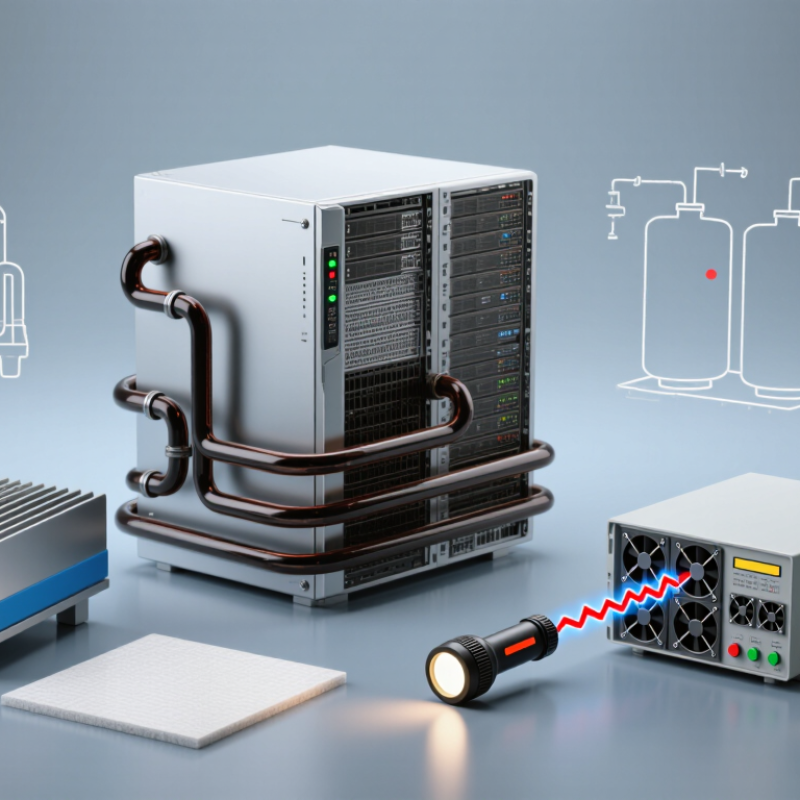
Table of Contents
[Hide]
Understanding Thermal Management Systems and Their Role in 2026
In 2026, thermal management systems will become central to safe, efficient, and durable equipment. They control heat through cooling, ventilation, insulation, heat exchange, or phase-change materials. These systems support data centers, electric vehicles, medical devices, factories, and renewable energy equipment. Heat does not disappear. It moves, accumulates, or escapes. A reliable design begins with accurate thermal measurements, not guesswork. Engineers should record temperature ranges, airflow patterns, humidity, operating loads, and failure points before selecting equipment.
Choosing a system requires more than comparing cooling capacity. Consider energy consumption, maintenance access, noise, installation space, material compatibility, and expected service life. Sensors should provide useful data under real operating conditions. Software can identify rising temperatures, but technicians still need to verify physical conditions. A small blocked filter or loose connection may create a serious hot spot. Testing should include peak loads, dusty environments, outdoor temperature changes, and repeated start-stop cycles.
Field testing often reveals weaknesses that laboratory results miss. One uncomfortable lesson is that the cheapest system can become expensive after installation. Overdesigned equipment can also waste energy and space. Therefore, selection teams should document assumptions and challenge them regularly. A practical decision may require trade-offs. Reliability, efficiency, safety, and repairability must be evaluated together. No design is perfect. The better choice is the one whose limitations are understood, monitored, and managed.
How to Choose Thermal Management Systems in 2026? - Understanding Thermal Management Systems and Their Role in 2026
| System Type | Typical Heat-Removal Range* | Primary Heat-Transfer Method | Best-Fit Applications in 2026 | Energy and Water Profile | Main Advantages | Key Limitations | Selection Priority |
|---|---|---|---|---|---|---|---|
| Forced-Air Cooling | Approximately 50–500 W/m²·K convective heat-transfer coefficient; application-dependent | Fans move air across heat sinks, fins, filters, or ducts | Low-to-moderate power electronics, industrial controls, telecom equipment, and general-purpose computing | Usually low water use; fan power and airflow resistance determine electrical overhead | Simple design, low initial cost, easy inspection, and broad service availability | Limited by air density, noise, dust, heat-sink size, and rising component heat flux | Choose when heat load, acoustic limits, and enclosure size remain manageable |
| Heat Pipes and Vapor Chambers | Commonly used for localized heat spreading from tens to several hundred watts, depending on geometry and working fluid | Phase change and capillary return transport heat from an evaporator to a condenser | Compact electronics, mobile systems, graphics modules, power converters, and space-constrained enclosures | Passive operation with no pump; final heat rejection may still require air or liquid cooling | High reliability, low noise, excellent heat spreading, and efficient use of limited space | Performance depends on orientation, bending, wick design, condenser capacity, and allowable temperature difference | Choose when hotspot spreading and passive heat transport are more important than bulk heat rejection |
| Single-Phase Liquid Cold Plates | Often suitable for approximately 0.5–10 W/cm² at the device or plate interface, subject to flow rate and temperature limits | A pumped liquid absorbs heat while remaining in a single liquid phase | High-power processors, power electronics, battery systems, laser equipment, and industrial drives | Low direct water use in a closed loop; pump power, filtration, and heat-rejection equipment must be considered | Higher heat capacity than air, controlled component temperatures, and compatibility with direct-to-chip layouts | Requires pumps, seals, manifolds, fluid compatibility checks, leak detection, and maintenance procedures | Choose when heat density exceeds practical air-cooling capability and service infrastructure is available |
| Two-Phase Cooling | Can support high local heat flux because boiling or evaporation absorbs substantial latent heat; actual limits depend on fluid and geometry | The working fluid evaporates at the heat source and condenses at a remote heat exchanger | High-density computing, advanced power electronics, transportation systems, and compact thermal modules | Potentially efficient heat transport; fluid containment, pressure control, and environmental requirements are critical | High heat-transfer capability, relatively uniform temperatures, and reduced pumping requirements in some designs | More complex controls, fluid selection, pressure management, validation, and servicing | Choose when extreme heat flux or tight temperature uniformity justifies additional system complexity |
| Immersion Cooling | Capacity varies widely; single-phase systems use circulated dielectric fluid, while two-phase systems use boiling and condensation | Direct contact between electronic assemblies and a non-conductive liquid | High-density data processing, specialized computing, edge infrastructure, and applications with strict acoustic limits | Can reduce fan energy and may reduce facility water demand; fluid life-cycle impact and recovery must be evaluated | High rack-level heat density, low acoustic output, uniform component temperatures, and reduced airborne dust | Hardware compatibility, fluid handling, maintenance access, materials compatibility, and retrofit complexity | Choose when heat density, noise, or facility constraints outweigh integration and fluid-management costs |
| Phase-Change Materials | Best suited to transient or peak-load control; energy storage depends on material mass and latent heat | The material absorbs heat during melting and releases it during solidification | Short-duration overloads, battery protection, intermittent electronics, transportation, and remote equipment | Passive during the storage period; requires a separate method to remove stored heat and reset the material | Silent operation, peak-temperature reduction, and useful thermal buffering during power or airflow interruptions | Finite thermal capacity, possible volume increase during melting, cycling limits, and slow regeneration | Choose when the critical requirement is temporary peak-load protection rather than continuous cooling |
| Thermoelectric Cooling | Generally appropriate for localized loads from a few watts to several hundred watts, depending on module size and hot-side rejection | An electrical current moves heat across semiconductor junctions | Optical sensors, laboratory instruments, precision temperature control, and compact electronics | No refrigerant circuit required; electrical efficiency is usually lower than passive or liquid alternatives | Compact, precise, reversible heating and cooling, and no moving parts in the module | Adds heat to the hot side, requires effective heat rejection, and may consume considerable electrical power | Choose when precise local temperature control is more important than maximum energy efficiency |
Engineering note: The performance ranges are indicative design ranges, not guaranteed ratings. Final selection should be based on heat load, peak heat flux, allowable junction temperature, ambient conditions, acoustic limits, reliability targets, maintenance capability, water availability, total cost of ownership, and applicable safety requirements.
Core decision rule for 2026: Use air cooling for moderate heat density, heat pipes for passive heat spreading, liquid cold plates for sustained high-power loads, two-phase or immersion systems for very high heat density, phase-change materials for transient peaks, and thermoelectric modules for precise localized temperature control.
Related Posts
-
Top Tips for Effective Thermal Management Systems Design?
-

Top Server Cooling Solutions for Optimal Performance and Efficiency?
-

What is Warm Water Cooling and How Does it Work?
-
2026 Top Trends in AI Data Center Cooling Solutions and Innovations?
-
How to Optimize Data Center Thermal Management for Improved Efficiency?
-

Top 10 Benefits of Direct Liquid Cooling in Data Centers?