-
PRODUCTS & SERVICESOptimized cooling solutions for modern data centersProducts & ServicesOptimized cooling solutions for modern data centers
-
CAPABILITIESAdvancing liquid cooling technologiesCapabilitiesAdvancing liquid cooling technologies
-
TechnologiesLiquid Cooling InnovationTechnologiesLiquid Cooling Innovation
-
RESOURCESLatest News & InformationResourcesLatest News & Information
-
ABOUTOur history, leadership and ownershipAboutOur history, leadership and ownership
-
CONTACTFacility locations and global operational footprint







Why Choose a Suspended LED Panel for Your Project?
Choosing the right ceiling light can influence comfort, productivity, and the character of an entire room. A Suspended Led Panel offers a clean alternative to traditional recessed fixtures. It hangs below the ceiling, creating an even layer of light across desks, corridors, classrooms, or retail areas. Its slim profile can also make high ceilings feel more balanced. The result is practical and visually calm.
However, appearance should not lead the decision alone. A qualified lighting professional should review ceiling height, mounting points, glare control, color temperature, and required illumination levels. For example, a conference table may need soft, uniform light, while a workshop requires stronger task lighting. A reliable panel should include clear photometric data, tested electrical components, and suitable certifications for the installation market. Check the details.
Suspended systems can simplify maintenance because technicians may reach the fixture without opening the ceiling. They can also support flexible layouts when workstations change. Yet cable alignment, suspension strength, and visible wiring demand careful planning. Small mistakes become obvious above a clean white desk. This is where many projects become less simple than expected. Energy savings may be attractive, but poor dimming performance or excessive glare can reduce satisfaction. A thoughtful specification balances efficiency, visual comfort, installation safety, and long-term service. The best choice is not always the newest model. It is the one that performs reliably in the actual space.
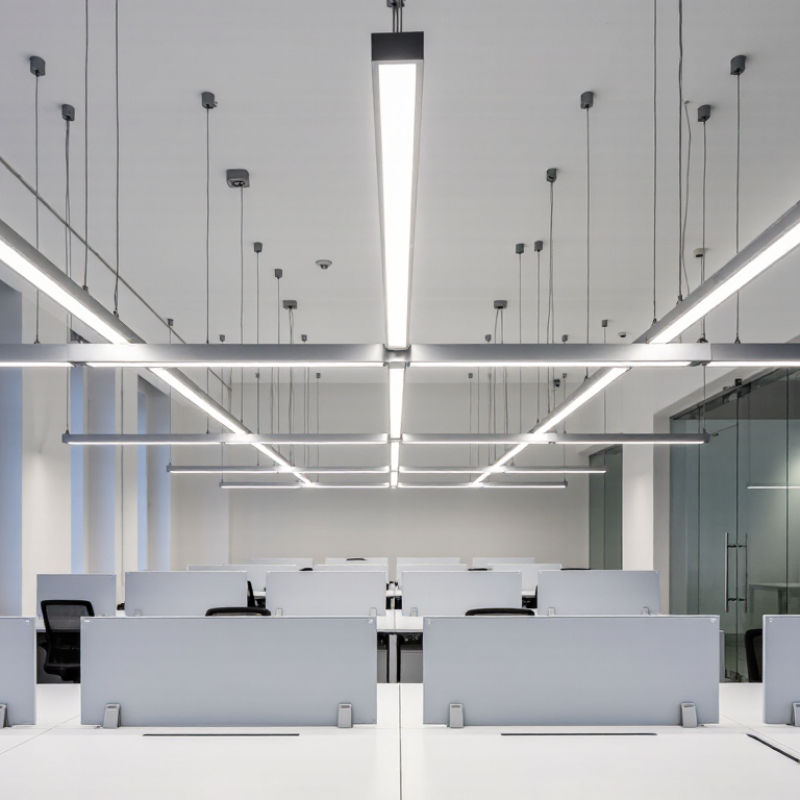
Table of Contents [Hide]
What Is a Suspended LED Panel and How Does It Work?
Why Choose a Suspended LED Panel for Your Project?
What Is a Suspended LED Panel and How Does It Work?
A suspended LED panel is a flat, energy-efficient light fixture hung below the ceiling with cables, rods, or adjustable suspension kits. Unlike a recessed panel, it remains visible and becomes part of the room’s design. In practice, its position matters as much as its lumen output. A panel placed too low can create glare on screens. Hung too high, it may leave desks dim. The fixture receives electrical power through its connection, while an internal driver converts incoming current into the stable power LEDs require. The LEDs then produce light across a broad surface, reducing harsh points and shadows.
A diffuser spreads light across the panel, creating a softer appearance for offices, classrooms, studios, and retail spaces. Some models support dimming, color-temperature adjustment, or automated controls. These features can improve comfort, but only when the electrical system supports them. Check compatibility before installation. The suspension cables also help position the fixture accurately over work areas. One detail is easy to miss: uneven cable lengths can make a clean panel look visibly tilted. Even experienced installers may need a second adjustment.
Tips: Measure the ceiling height and desk layout first. Choose a suitable color temperature and a high color-rendering rating for detailed tasks. Confirm the driver, dimmer, and control-system compatibility. Inspect the diffuser for glare from seated viewpoints. Leave access for maintenance, because a perfect installation can still require future cleaning or driver replacement.