-
PRODUCTS & SERVICESOptimized cooling solutions for modern data centersProducts & ServicesOptimized cooling solutions for modern data centers
-
CAPABILITIESAdvancing liquid cooling technologiesCapabilitiesAdvancing liquid cooling technologies
-
TechnologiesLiquid Cooling InnovationTechnologiesLiquid Cooling Innovation
-
RESOURCESLatest News & InformationResourcesLatest News & Information
-
ABOUTOur history, leadership and ownershipAboutOur history, leadership and ownership
-
CONTACTFacility locations and global operational footprint







Why Choose a Smart Air Pressure Gauge?
Choosing a Smart Air Pressure Gauge is not about adding another device to a toolbox. It is about making pressure checks clearer, faster, and more consistent.
William Van Tassel, Ph.D., formerly AAA’s manager of driver training programs, has emphasized, “Checking your tire pressure is one of the easiest things you can do to improve your vehicle’s safety and fuel economy.” His point remains practical. A tire may look properly inflated while its pressure is already outside the recommended range. A Smart Air Pressure Gauge can display a precise reading, store measurements, and alert users when pressure changes unexpectedly.
Imagine checking a cold tire before a morning commute. The digital screen shows 31.6 PSI, not merely “low” or “high.” Some models connect with mobile apps, while others provide audible alerts or automatic shutoff functions. These details reduce guesswork, especially in dim garages or busy workshops.
Still, smart does not mean perfect. Sensors can lose accuracy, batteries can weaken, and wireless connections may fail. That limitation matters. Users should compare readings with the vehicle manufacturer’s recommended pressure and inspect the gauge regularly. A connected tool cannot replace sound judgment.
The real advantage is repeatable information. For drivers, fleet operators, cyclists, and maintenance teams, consistent measurements can support safer handling, steadier fuel use, and longer tire life. The best Smart Air Pressure Gauge is not necessarily the most expensive model. It is the one that delivers readable data, dependable calibration, and simple operation when pressure matters most.
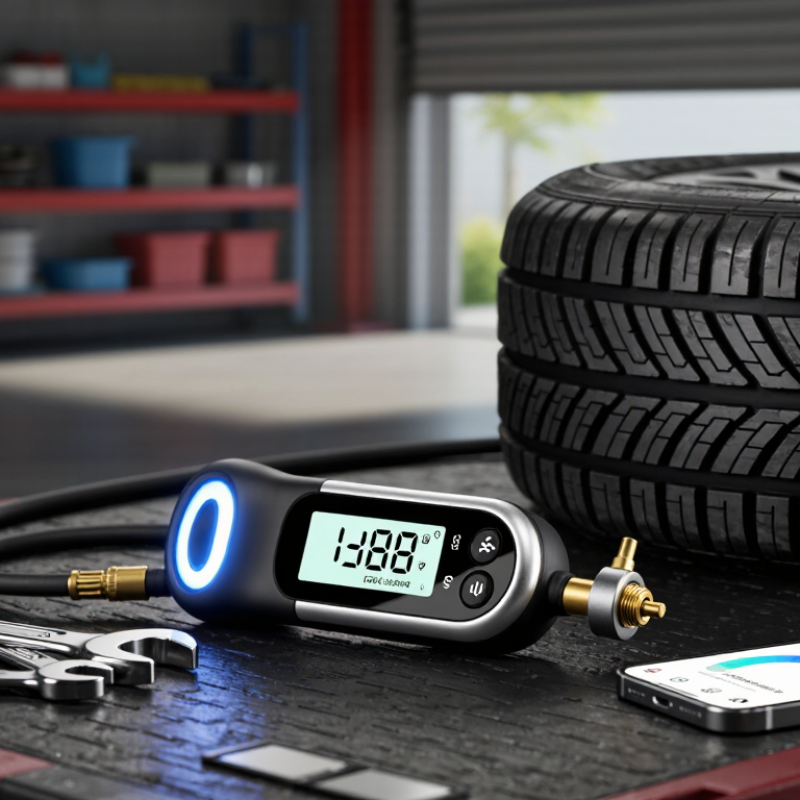
Table of Contents [Hide]
What Is a Smart Air Pressure Gauge?
A smart air pressure gauge is a measuring device with sensors, a digital processor, and useful data features. Unlike a basic dial gauge, it can show pressure more precisely and detect changes quickly. Some models store readings, support automatic shutoff, or send alerts to a connected device. The exact features vary, so “smart” should not be accepted without checking the specifications.
In practical maintenance, the value appears during repeated checks. A technician can compare readings across several tires, tanks, or pneumatic lines without writing every number down. The U.S. Department of Energy reports that fuel economy may drop by about 0.2% for each 1 psi of tire underinflation. NHTSA safety guidance also stresses regular pressure inspection because underinflation affects handling, heat buildup, and tire wear. These figures show why accurate measurement matters. Still, a smart gauge is not automatically accurate. Temperature, battery condition, valve damage, and poor calibration can distort results. I have found that convenience sometimes encourages rushed checks.
Tips: Measure when equipment is cool and stable. Check the recommended pressure, not the maximum printed on the tire. Compare the gauge with a calibrated reference periodically. Keep a simple record of date, pressure, and temperature. Small errors become expensive over time.