-
PRODUCTS & SERVICESOptimized cooling solutions for modern data centersProducts & ServicesOptimized cooling solutions for modern data centers
-
CAPABILITIESAdvancing liquid cooling technologiesCapabilitiesAdvancing liquid cooling technologies
-
TechnologiesLiquid Cooling InnovationTechnologiesLiquid Cooling Innovation
-
RESOURCESLatest News & InformationResourcesLatest News & Information
-
ABOUTOur history, leadership and ownershipAboutOur history, leadership and ownership
-
CONTACTFacility locations and global operational footprint






What Is a Zigbee Fan Coil Thermostat and How Does It Work?
A zigbee fan coil thermostat is a wireless controller for heating and cooling systems. It connects the thermostat, fan coil unit, gateway, and smart home platform through the Zigbee mesh network. Think of it as a quiet traffic manager.
Unlike a basic wall thermostat, this device can control fan speed, operating modes, valve positions, and temperature settings. It may also report room conditions to a central building management system. Tobin Richardson, former president and CEO of the Zigbee Alliance, said, “Interoperability makes the Internet of Things work.” That idea explains Zigbee’s value in modern HVAC control. Yet, real installations are rarely perfect.
A thermostat may join the network quickly, while a metal cabinet weakens its signal. A nearby router can improve reliability. The controller usually measures room temperature with an internal sensor, then sends commands to the fan coil actuator. Some models support cooling, heating, auto, sleep, and energy-saving schedules. Others add humidity sensing or occupancy detection.
The word “smart” needs careful handling. A zigbee fan coil thermostat still depends on correct wiring, compatible valves, suitable firmware, and a stable coordinator. Poor commissioning can create short cycling, delayed commands, or uncomfortable room temperatures. Small errors matter.
This guide explains what the thermostat does, how Zigbee communication works, and where installation problems appear. It also examines practical benefits, including lower wiring demand, flexible zoning, and remote adjustment. The technology is useful, but it is not magic. Good results come from sound HVAC design, accurate sensor placement, and thoughtful network planning.
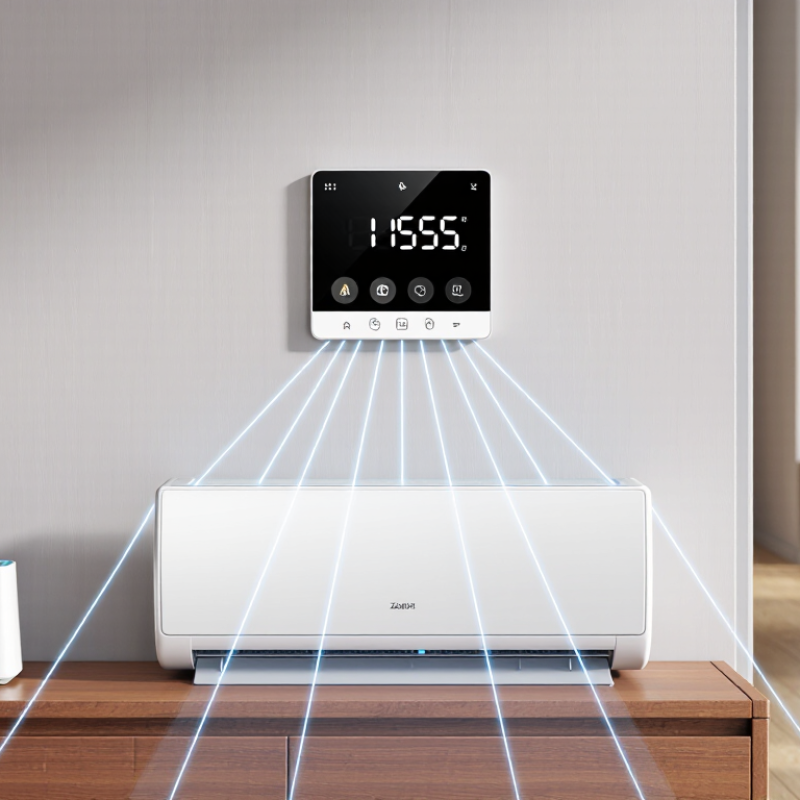
Table of Contents [Hide]
Zigbee Fan Coil Thermostat: Definition and Core Components
A Zigbee fan coil thermostat is a room controller that regulates heating, cooling, and fan speed through a Zigbee wireless network. Unlike a simple temperature switch, it combines sensing, communication, and equipment control in one wall-mounted device. The International Energy Agency reported that buildings consumed about 30% of global final energy in 2022, making precise room control increasingly important.
Its core components include a temperature sensor, microcontroller, Zigbee radio, power supply, user interface, and output relays. Some models also include humidity sensors, occupancy detection, and a valve-control circuit. The relay can start a low, medium, or high fan speed, while another output opens or closes the chilled-water or hot-water valve. A coordinator or gateway links the thermostat with a building-management platform. Zigbee mesh routing can improve coverage, but walls and metal fan-coil cabinets may weaken signals.
During commissioning, technicians should compare the displayed temperature with a calibrated meter. A two-degree error can create unnecessary valve cycling. The U.S. Department of Energy notes that properly scheduled thermostat setbacks can reduce annual heating and cooling use, although actual savings depend on climate and equipment. That caveat matters.
A Zigbee thermostat cannot correct an oversized valve, blocked filter, or poorly balanced fan. In practice, control logic often matters more than wireless range. The weak point is frequently installation, not the protocol.