-
PRODUCTS & SERVICESOptimized cooling solutions for modern data centersProducts & ServicesOptimized cooling solutions for modern data centers
-
CAPABILITIESAdvancing liquid cooling technologiesCapabilitiesAdvancing liquid cooling technologies
-
TechnologiesLiquid Cooling InnovationTechnologiesLiquid Cooling Innovation
-
RESOURCESLatest News & InformationResourcesLatest News & Information
-
ABOUTOur history, leadership and ownershipAboutOur history, leadership and ownership
-
CONTACTFacility locations and global operational footprint

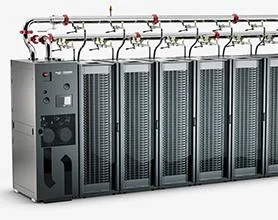


What Is a Water Chiller and How Does It Work?
A Water Chiller removes heat from water and sends the cooled liquid through air-handling units, fan-coil units, or process equipment. Inside the machine, refrigerant absorbs heat through an evaporator. A compressor raises its pressure and temperature. The condenser then rejects heat outdoors or into a cooling tower. The cycle repeats, quietly but continuously.
This equipment matters because cooling demand is rising worldwide. The International Energy Agency’s report, The Future of Cooling, projects that energy demand for space cooling could more than triple by 2050 without stronger efficiency measures. The U.S. Department of Energy also identifies chillers as major electricity users in commercial buildings. Small efficiency losses become expensive quickly. A dirty condenser tube, incorrect flow rate, or poorly tuned control sequence can increase kW per ton.
Professor Moncef Krarti, an ASHRAE Fellow and building-efficiency researcher, has stated, “Energy efficiency is not a single technology; it is a system decision.” That principle shapes this guide. We will examine vapor-compression and absorption chillers, cooling towers, pumps, compressors, and practical efficiency measurements. COP and kW per ton will appear often, but numbers alone can mislead. A laboratory rating may not match a humid afternoon in a crowded office tower. Real plants are messier. Maintenance records, water quality, load patterns, and operator experience all influence performance. The explanation ahead aims to be technically accurate, yet one caution remains: no Water Chiller works efficiently when the entire cooling system is poorly designed.
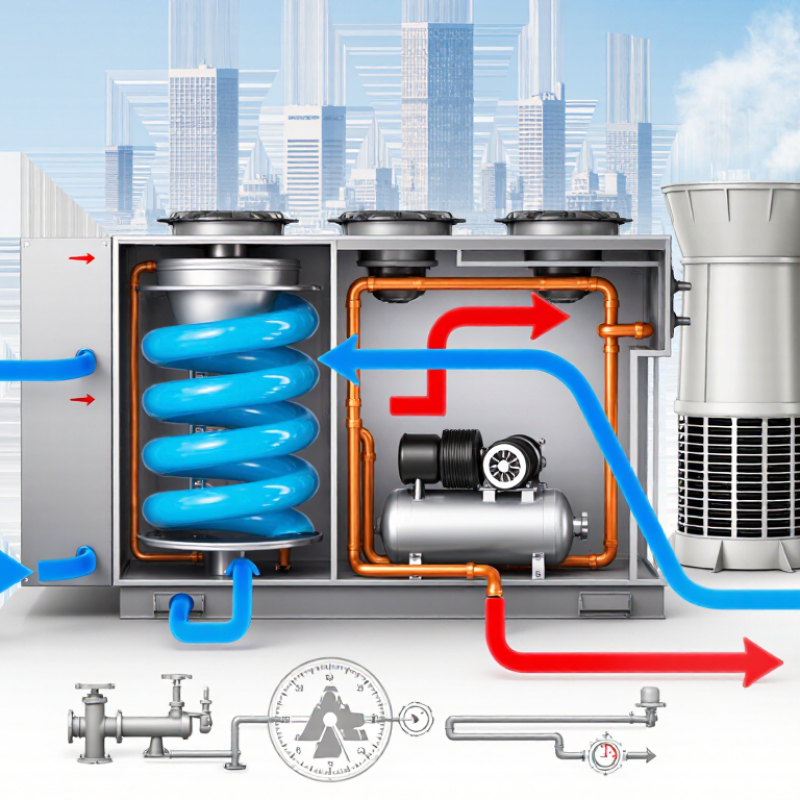
Table of Contents [Hide]
What Is a Water Chiller?
A water chiller is a refrigeration machine that removes heat from circulating water. The cooled water then travels through pipes to air handlers, process equipment, or other heat exchangers. It does not produce “cold” directly. Instead, it transfers unwanted heat away from a building or industrial process.
Inside the chiller, an evaporator absorbs heat from the water. A compressor raises the refrigerant’s pressure and temperature. The condenser releases that heat, while an expansion valve lowers refrigerant pressure for another cooling cycle. Air-cooled chillers reject heat through fans and outdoor coils. Water-cooled models use condenser water and a cooling tower. The correct choice depends on climate, available space, noise limits, and operating demand. A poorly sized chiller may cycle too often, waste energy, or struggle during peak heat. That detail is easy to underestimate.
Tips: Check water flow, filter condition, and temperature readings regularly. Keep condenser surfaces clean. Watch for unusual vibration, rising energy use, or unstable outlet temperatures. A slightly dirty coil can affect performance more than expected. Professional commissioning and scheduled maintenance improve reliability, although real systems rarely perform perfectly every day.