-
PRODUCTS & SERVICESOptimized cooling solutions for modern data centersProducts & ServicesOptimized cooling solutions for modern data centers
-
CAPABILITIESAdvancing liquid cooling technologiesCapabilitiesAdvancing liquid cooling technologies
-
TechnologiesLiquid Cooling InnovationTechnologiesLiquid Cooling Innovation
-
RESOURCESLatest News & InformationResourcesLatest News & Information
-
ABOUTOur history, leadership and ownershipAboutOur history, leadership and ownership
-
CONTACTFacility locations and global operational footprint






What Are the Top Range Exhaust Types in 2026?
Choosing a Range Exhaust system in 2026 is not just a style decision. It affects how cooking smoke, grease, heat, and odors leave the kitchen. The main options include under-cabinet, wall-mounted chimney, island, insert, and downdraft models. Each suits a different layout. A wide island hood, for example, must capture rising cooking plumes from several feet above the cooktop. A compact under-cabinet model may fit a tighter kitchen, but its performance depends on its design and installation.
The market is expanding, but that alone does not identify the best hood. Grand View Research estimated the global range hood market at US$15.05 billion in 2023 and projected a 5.3% compound annual growth rate from 2024 to 2030. That forecast signals continued demand, not a guarantee of better performance. For a more useful comparison, check the Home Ventilating Institute’s certified product listings for airflow and sound ratings, then confirm that the figures match your cooking needs. Quiet matters. So does effective capture. Duct size, duct length, and make-up air can also change real-world results. That distinction is easy to miss. Even a powerful hood may disappoint if the duct run is restrictive or the canopy does not cover the cooking surface. The following guide compares the leading Range Exhaust types, their practical strengths, and the trade-offs worth checking before you buy. No single design fits every kitchen.
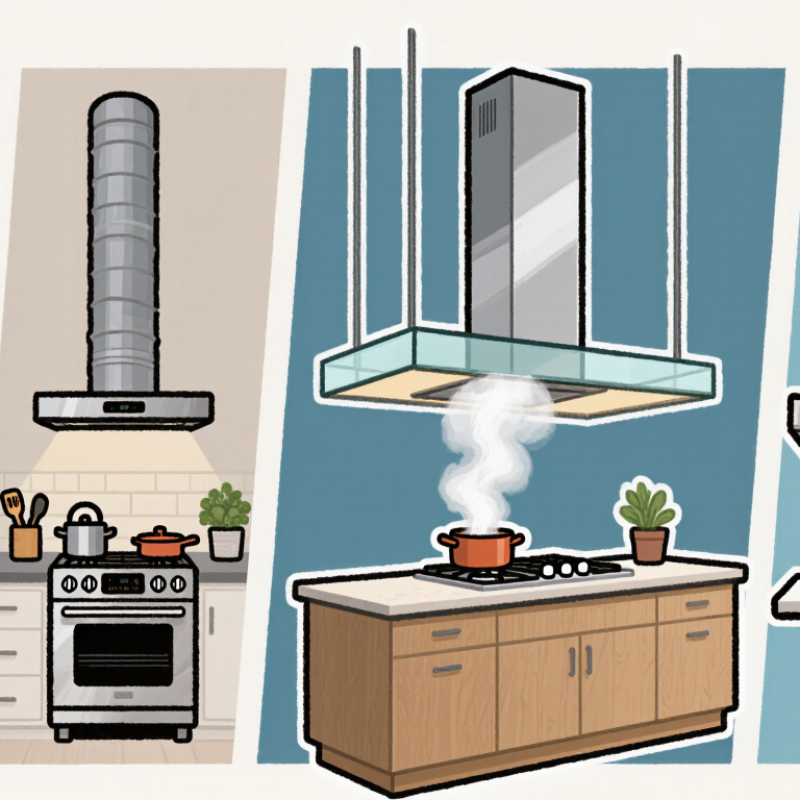
Table of Contents [Hide]
How Range Hoods Capture and Vent Cooking Exhaust
A range hood captures cooking exhaust by pulling rising air, smoke, grease, and odors toward its intake. Its capture area matters: a shallow hood may miss fumes from a wide pan, especially when burners are near the front. Keep the hood low enough to catch rising air, while following the installation clearances specified for the appliance and cooktop. Strong airflow helps, but more is not always better; noise and poor duct design can make a powerful hood unpleasant to use.
Ducted hoods carry exhaust outdoors through a duct. Short, smooth duct runs with fewer bends generally help air move efficiently.
Recirculating models pass air through grease and odor filters, then return it to the kitchen. They can reduce some cooking smells, but they do not remove moisture or heat from the room. Filters need regular cleaning or replacement. No hood catches everything. Even a well-sized one can miss a quick puff of steam when a pan sits outside its capture zone.
Tips: Turn the hood on before cooking, and leave it running briefly afterward. Clean metal grease filters as directed; a sticky filter can restrict airflow. If smoke lingers, check the filter, duct path, and hood position before assuming the fan needs more power.