-
PRODUCTS & SERVICESOptimized cooling solutions for modern data centersProducts & ServicesOptimized cooling solutions for modern data centers
-
CAPABILITIESAdvancing liquid cooling technologiesCapabilitiesAdvancing liquid cooling technologies
-
TechnologiesLiquid Cooling InnovationTechnologiesLiquid Cooling Innovation
-
RESOURCESLatest News & InformationResourcesLatest News & Information
-
ABOUTOur history, leadership and ownershipAboutOur history, leadership and ownership
-
CONTACTFacility locations and global operational footprint




Top 10 Car Wiring Harness Duct Machines for Buyers in 2026
As vehicle platforms grow more complex, the equipment used to form and process protective ducts deserves closer attention. The Car Wiring Harness Duct Machine sits at a practical point in production: its accuracy can affect duct fit, routing consistency, and downstream assembly. Small variations matter. A poorly matched duct may create rework around clips, bends, or crowded dashboard areas.
The International Energy Agency’s Global EV Outlook 2025 reports that electric-car sales exceeded 17 million in 2024, representing more than one-fifth of global car sales. OICA’s 2024 production statistics also show the continued scale of global vehicle manufacturing. These reports describe market activity, not machine demand directly. Still, they help explain why buyers are assessing flexible equipment for changing vehicle programs and production volumes.
This Top 10 guide compares machines through buyer-focused criteria: duct size range, forming consistency, changeover time, controls, safety features, service access, and supplier support. A specification sheet can look convincing. Real production is less tidy. Material variation, operator experience, and line layout can all affect results, so no single machine is best for every factory. The models below are intended to help buyers ask sharper questions before requesting trials, references, or a quotation.
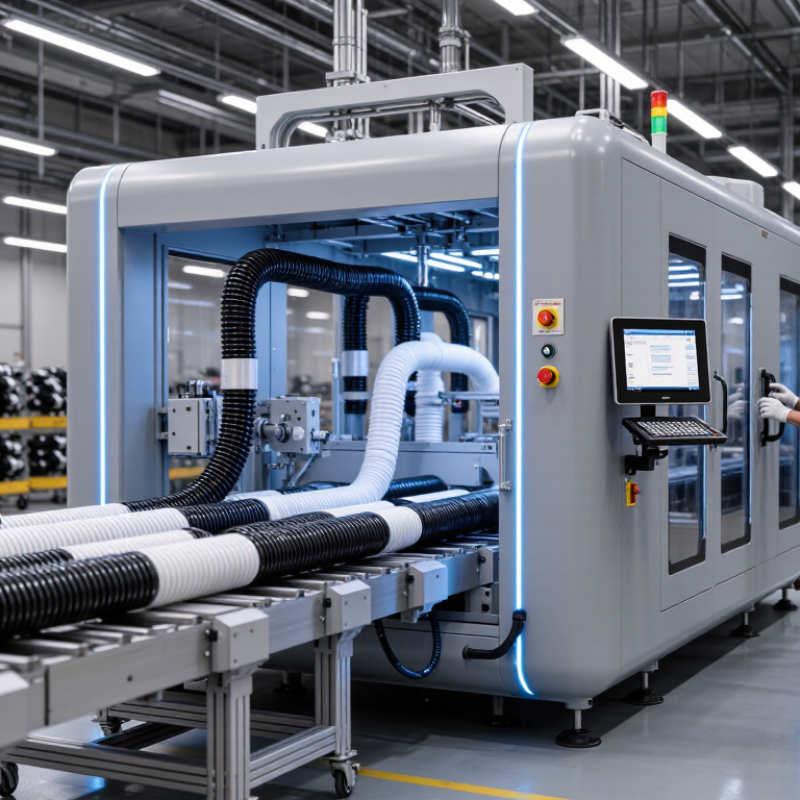
Table of Contents [Hide]
What Car Wiring Harness Duct Machines Do and How They Work
A car wiring harness duct machine prepares protective channels that guide and separate vehicle wiring. Depending on the production line, it may feed plastic duct from a coil or accept straight lengths, then measure and cut each piece. Some machines also punch openings or trim edges to match a specified layout.
That matters. Clean cuts help duct sections fit together without sharp plastic fragments near the wires.
During operation, feed rollers move the material past a length sensor. A guarded cutting blade stops it at the programmed measurement. If openings are needed, a punch unit makes them at set positions. Operators typically check the first few pieces with a ruler or profile gauge, then inspect samples as production continues.
Small errors add up. A worn blade can leave rough edges, while loose guides may shift a slot by a few millimeters.
Real setups are not always tidy. Different duct profiles can need separate guides, cutting settings, and test runs. A practical machine choice depends on material, duct size, required cut accuracy, and daily output—not just speed.
Even a capable system needs regular checks for blade wear, sensor alignment, and plastic debris around the feed path.