-
PRODUCTS & SERVICESOptimized cooling solutions for modern data centersProducts & ServicesOptimized cooling solutions for modern data centers
-
CAPABILITIESAdvancing liquid cooling technologiesCapabilitiesAdvancing liquid cooling technologies
-
TechnologiesLiquid Cooling InnovationTechnologiesLiquid Cooling Innovation
-
RESOURCESLatest News & InformationResourcesLatest News & Information
-
ABOUTOur history, leadership and ownershipAboutOur history, leadership and ownership
-
CONTACTFacility locations and global operational footprint




What Is an MMA Welding Machine and How Does It Work?
What Is an Mma Welding Machine and How Does It Work?
An MMA Welding Machine, also called a stick welder, joins metal through an electric arc. The machine creates current between a coated electrode and the workpiece. When the electrode touches the steel, the circuit closes. A bright arc forms almost instantly.
The electrode melts into the joint. Its flux coating also burns and produces protective gas. This shield reduces contact with oxygen and nitrogen in the air. After cooling, the coating becomes a brittle slag layer. The welder removes it with a chipping hammer, revealing the bead underneath. Small sparks often bounce across the workshop floor. The sound changes when the arc length changes.
Welding engineer John C. Villafuerte, author of Metal Fabricator’s Handbook, describes the process this way: “Stick welding is simple in equipment, but demanding in technique.” That observation remains useful. An MMA Welding Machine has a straightforward design, yet poor electrode angle, unstable travel speed, or incorrect amperage can create weak penetration. It is easy to blame the machine. Sometimes, the operator is the variable.
This guide will explain the machine’s power source, electrode selection, polarity, arc control, and common applications. It will also examine practical limits. MMA welding works well outdoors and on rusty steel, but it requires patience and careful preparation. A clean joint still matters. So does proper ventilation, eye protection, dry gloves, and a stable work area. The process looks rough at first. With practice, its control becomes surprisingly precise.
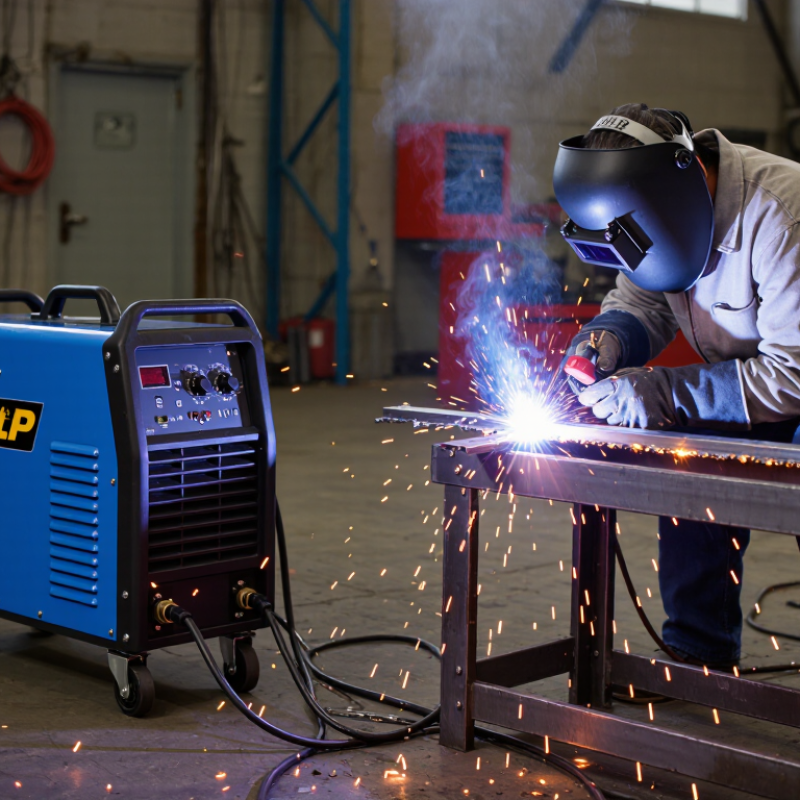
Table of Contents [Hide]
What Is an MMA Welding Machine?
An MMA welding machine is a power source for manual metal arc welding, often called stick welding. It creates an electric arc between a coated metal electrode and the workpiece. The arc melts both materials, while the electrode’s coating produces shielding gas and a layer of slag over the cooling weld. No separate shielding-gas cylinder is needed.
A typical setup has the machine, welding leads, an electrode holder, and a work clamp. The clamp completes the electrical circuit; the holder carries the electrode. The operator adjusts the current to suit the electrode type and thickness of the metal. Too little current can make the electrode stick, while too much may burn through thin material. Small settings matter.
MMA is useful for repairs, outdoor work, and steel parts that are not perfectly clean. Wind is less disruptive than with gas-shielded processes, though rust and paint still need attention. Not especially neat. Slag must be chipped away between passes, and damp electrodes can contribute to weld defects, so they should be stored as their instructions specify. Keeping a short, steady arc takes practice; the first bead may be uneven, and that is a useful sign to check technique and settings.
What Is an MMA Welding Machine and How Does It Work?
| Topic | How It Works or Typical Data | Practical Note |
|---|---|---|
| Meaning of MMA | MMA stands for manual metal arc welding. It is also commonly called shielded metal arc welding (SMAW) or stick welding. | The welder manually guides a flux-coated consumable electrode along the joint. |
| Power source | An MMA machine converts mains or generator power into controlled welding current. Most modern inverter machines use electronic switching to regulate the output. | Input voltage and required supply capacity depend on the machine’s rating and the selected welding current. |
| Output characteristic | MMA welding generally uses a constant-current output, helping limit current changes as the arc length varies. | The operator adjusts the current to suit the electrode, workpiece, and welding position. |
| Arc and heat | Touching and lifting the electrode establishes an electric arc. The arc’s heat melts the electrode tip and base metal to form a weld pool. | A steady, short arc helps maintain control and reduce excessive spatter. |
| Electrode and flux coating | The electrode’s metal core supplies filler metal. Its coating produces shielding gases and slag, helping protect and shape the molten weld. | After cooling, slag is normally removed before inspection or another pass. |
| Common electrode current ranges | Approximate starting ranges for many general-purpose electrodes: 2.0 mm: 40–70 A 2.5 mm: 60–100 A 3.2 mm: 90–140 A 4.0 mm: 130–190 A | Actual settings vary by electrode type, manufacturer, position, joint, and machine. Follow the electrode’s stated range. |
| Polarity | Depending on the electrode and machine, welding may use alternating current (AC) or direct current (DC). DC electrodes may specify electrode-positive (DCEP) or electrode-negative (DCEN) connection. | Use the polarity recommended for the electrode; not every electrode is suitable for every current type or polarity. |
| Duty cycle | Duty cycle states how long a machine can weld at a specified output during a standard 10-minute period. For example, 60% means 6 minutes welding and 4 minutes cooling at that rating. | The permitted welding time usually decreases as output current increases. Check the rating plate and manual. |
| Typical setup | Connect the electrode holder and work clamp to the specified output terminals, set current and polarity, then attach the work clamp to clean metal near the joint. | Switch off the machine before changing connections, and confirm that cables and clamps are correctly rated. |
| Typical applications | MMA welding is commonly used for steel fabrication, repairs, maintenance, and work in locations where shielding-gas equipment is inconvenient. | It is versatile, but electrode changes and slag removal make it less continuous than some wire-feed processes. |
| Safety essentials | Use a suitable welding helmet, gloves, protective clothing, and adequate ventilation. Keep the work area clear of flammable materials and protect others from arc radiation. | Follow local electrical and workplace safety requirements, and keep the equipment dry and in good condition. |