-
PRODUCTS & SERVICESOptimized cooling solutions for modern data centersProducts & ServicesOptimized cooling solutions for modern data centers
-
CAPABILITIESAdvancing liquid cooling technologiesCapabilitiesAdvancing liquid cooling technologies
-
TechnologiesLiquid Cooling InnovationTechnologiesLiquid Cooling Innovation
-
RESOURCESLatest News & InformationResourcesLatest News & Information
-
ABOUTOur history, leadership and ownershipAboutOur history, leadership and ownership
-
CONTACTFacility locations and global operational footprint






How to Choose the Right DC Surge Protection?
Choosing the right DC surge protection begins with understanding where damaging voltage comes from. Lightning is an obvious threat. Switching events, long cable runs, batteries, and nearby industrial equipment can also create dangerous transients. A suitable device helps limit this excess energy before it reaches controllers, sensors, inverters, or communication equipment. In practical installations, the small details matter. Cable length, grounding quality, operating voltage, and expected surge current can change the correct choice. Surge Protection Dc should never be selected by appearance alone. A compact device may look efficient, yet lack the discharge capacity required for an exposed rooftop system.
Reliable selection combines field experience with verified technical information. Check the system’s maximum continuous voltage, protection modes, response characteristics, and installation environment. Confirm that the product has appropriate testing records and clear manufacturer specifications. Standards and certification marks can support confidence, but they do not replace a proper site assessment. A qualified installer should also examine bonding, conductor routing, backup protection, and maintenance access. Keep the path short.
It is tempting to choose the highest-rated protector and move on. That approach is not always correct. Excessive ratings may reduce coordination with other protective devices, while undersized products can fail during a severe event. No selection is perfect. However, a documented assessment makes the decision more defensible and dependable. This guide explains the practical questions behind DC surge protection, helping readers compare solutions with greater clarity and fewer costly assumptions.
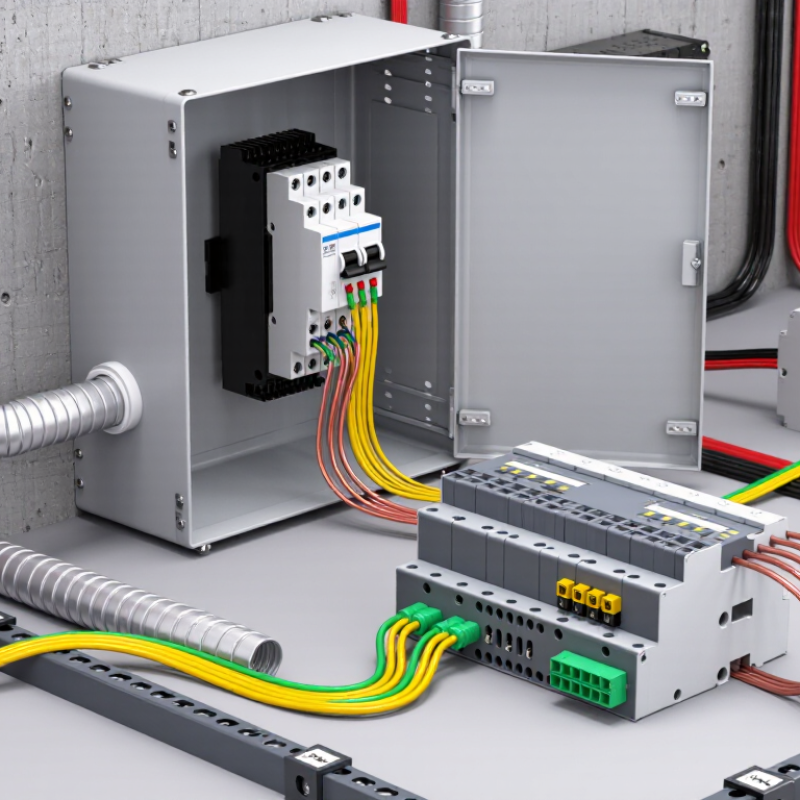
Table of Contents [Hide]
Understanding DC Surge Risks and Protection Requirements
How to Choose the Right DC Surge Protection?
Understanding DC surge risks begins with recognizing how often lightning and switching events occur. NASA satellite observations estimate about 1.4 billion lightning flashes worldwide each year. NOAA climatology records approximately 25 million flashes across the United States annually. A nearby strike can induce thousands of volts along PV cables, battery connections, and control wiring, even without a direct hit.
DC systems are especially exposed because they can maintain current after a fault begins. Long outdoor cables act like antennas. Parallel strings may also distribute surge energy across sensitive inverters and monitoring equipment. Choose a surge protective device according to the system’s maximum DC voltage, short-circuit current, discharge capacity, and grounding arrangement. IEC 61643-31 provides requirements for surge protective devices used on photovoltaic DC circuits. Protection should match the actual installation, not just the equipment label.
Field inspections often reveal simple weaknesses. Cables run beside metal frames. Earth connections are loose. Devices are installed far from the protected equipment. These details increase residual voltage and reduce protection performance. Use short, straight bonding conductors, coordinated protection at array and inverter locations, and appropriate backup disconnection. The National Renewable Energy Laboratory has repeatedly identified wiring, connectors, and inverters as important PV reliability concerns. That matters. However, designers sometimes rely too heavily on standards and overlook local lightning density, cable length, and maintenance history. The assumption is imperfect. Recheck it.
How to Choose the Right DC Surge Protection? - Understanding DC Surge Risks and Protection Requirements
| DC System or Application | Typical Maximum Operating Voltage | Common Surge Sources | Recommended Protection Approach | Key Selection Parameter |
|---|---|---|---|---|
| 12 V DC control and instrumentation circuits | 12 V DC nominal; allowable operating voltage depends on the equipment design | Inductive load switching, relay operation, nearby lightning, and ground-potential differences | Use a low-voltage DC SPD at the equipment or distribution entry point; protect signal and power wiring separately where required | Continuous operating voltage must exceed the highest normal DC voltage; verify polarity, leakage current, and clamping voltage |
| 24 V DC automation and control systems | 24 V DC nominal; many industrial power supplies operate over a wider input range | Switching power supplies, motors, solenoids, long cable runs, and lightning-induced transients | Install coordinated SPDs at the incoming DC supply and near sensitive controllers or remote I/O | Select an appropriate DC continuous operating voltage and confirm the required voltage protection level for the equipment |
| 48 V DC telecommunications and network power | Typically around 48 V DC, with system voltage varying by charging and operating conditions | Outdoor cable exposure, lightning, battery switching, rectifier transients, and bonding faults | Use a DC SPD at the power distribution point and coordinate it with protection on metallic communication lines | Check maximum battery or rectifier voltage, short-circuit current, connection polarity, and backup-power requirements |
| 120 V DC industrial or utility control circuits | 120 V DC nominal; charging voltage and system tolerances must be included | Lightning, inductive switching, battery-bank faults, and long outdoor conductors | Use a DC-rated SPD with suitable interrupting and follow-current characteristics; install short, low-inductance connections to the bonding system | Verify Uc, voltage protection level, DC short-circuit rating, and compatibility with the system grounding arrangement |
| Solar photovoltaic strings up to 600 V DC | Up to 600 V DC, depending on the array design and the maximum open-circuit voltage at the lowest expected temperature | Direct or nearby lightning, induced lightning current, and cable-loop transients | Use a PV-specific DC SPD at the combiner box and inverter side when cable length, exposure, or risk assessment requires it | UCPV must be at least the calculated maximum PV open-circuit voltage; check PV short-circuit current and polarity |
| Solar photovoltaic arrays up to 1,000 V DC | Up to 1,000 V DC for many commercial and utility-scale PV designs | Lightning current sharing, induced surges on long string cables, and differences in earth potential | Apply coordinated PV DC SPDs at array, combiner, inverter, and boundary locations according to the installation risk assessment | Confirm UCPV, nominal discharge current, impulse current where required, voltage protection level, and enclosure environmental rating |
| Battery energy storage systems | Common system voltages range from tens of volts to several hundred volts DC | Inverter switching, battery contactor operation, lightning, and transients transferred from AC or communication circuits | Use SPDs specifically rated for the battery voltage and fault conditions; coordinate DC, AC, and communication protection | Check maximum charge voltage, available short-circuit current, DC interruption behavior, thermal protection, and isolation requirements |
| Electric vehicle charging DC circuits | May range from several hundred volts to approximately 1,000 V DC, depending on the charging system | Utility-side lightning, switching transients, long charging cables, and power-conversion equipment | Install coordinated surge protection on the AC input, DC output, and data or control interfaces as required by the equipment design | Match the SPD to the maximum DC output voltage, prospective fault current, charging mode, enclosure rating, and required response time |
Selection checklist: Confirm the maximum continuous DC voltage, required voltage protection level, surge-current capability, DC short-circuit rating, grounding configuration, backup protection, environmental conditions, conductor length, and coordination with upstream and downstream SPDs. For photovoltaic systems, calculate the maximum open-circuit voltage using the lowest expected operating temperature before selecting UCPV.