-
PRODUCTS & SERVICESOptimized cooling solutions for modern data centersProducts & ServicesOptimized cooling solutions for modern data centers
-
CAPABILITIESAdvancing liquid cooling technologiesCapabilitiesAdvancing liquid cooling technologies
-
TechnologiesLiquid Cooling InnovationTechnologiesLiquid Cooling Innovation
-
RESOURCESLatest News & InformationResourcesLatest News & Information
-
ABOUTOur history, leadership and ownershipAboutOur history, leadership and ownership
-
CONTACTFacility locations and global operational footprint



How to Find China Best Stainless Steel Round Tube Supplier?
Finding China’s best Stainless Steel Round Tube supplier requires more than comparing online prices. It requires careful evidence, technical understanding, and communication that survives real production pressure. A reliable supplier should explain steel grades, outside diameter, wall thickness, surface finish, tolerance, and available manufacturing methods clearly.
Look for verifiable experience in your industry. Ask for recent mill test certificates, inspection records, product photographs, and references from comparable buyers. Check whether each bundle carries clear labels showing grade, size, heat number, quantity, and production date. Request samples before placing a large order. Measure the tube with calibrated tools, inspect weld seams, and examine the surface under consistent lighting. Small details often reveal larger quality problems.
Do not select a supplier by price alone. A low quotation may exclude packaging, testing, export documentation, or protection against surface damage. Discuss standards such as ASTM, EN, or other specifications required for your project, then confirm them in the purchase contract. Ask how the supplier manages nonconforming products, delivery delays, and inspection disputes. Their response can be more valuable than a polished website.
No checklist is perfect. Even experienced buyers can miss a tolerance issue or misunderstand a finish code. That is why written specifications, pre-shipment inspection, and traceable communication matter. A strong China supplier should provide stable quality, practical technical advice, transparent lead times, and responsive after-sales support. The best choice is not merely the cheapest factory. It is the partner that can repeatedly deliver the right Stainless Steel Round Tube, with evidence to support every important claim.
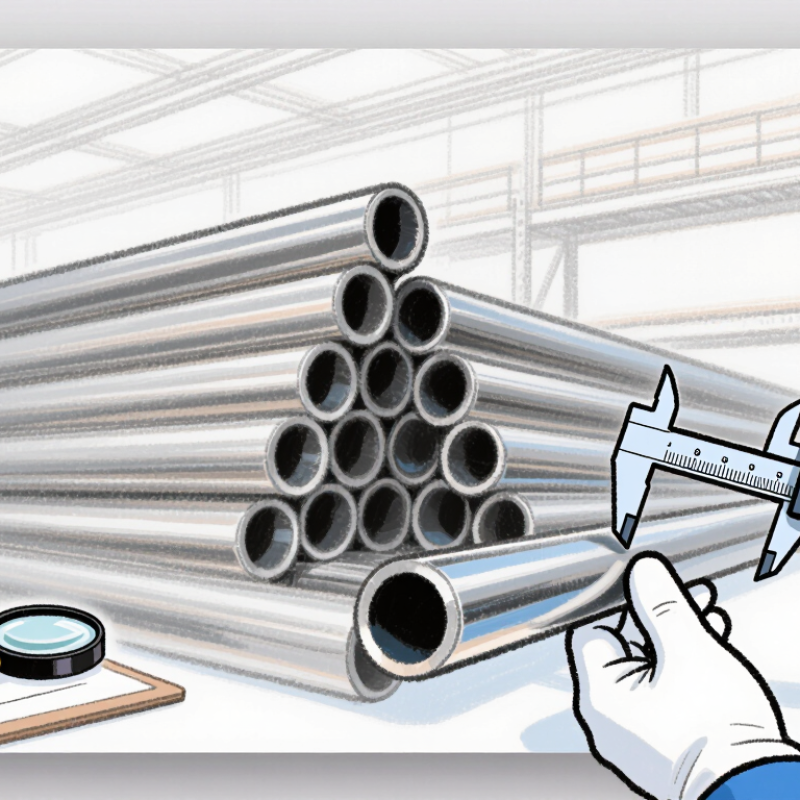
Table of Contents [Hide]
What Defines a Reliable Stainless Steel Round Tube Supplier?
Finding China’s best stainless steel round tube supplier requires more than comparing online prices. A reliable supplier explains its process clearly. Ask about steel grade, outside diameter, wall thickness, surface finish, and tolerance. These details affect fit, welding, and service life. An experienced supplier should answer directly, without hiding behind technical language. During a factory visit or video inspection, look for clean storage, labeled bundles, calibrated measuring tools, and traceable heat numbers. Small signs matter.
Request recent mill test certificates and independent inspection options. Certificates should match the delivered heat number, chemical composition, mechanical results, and dimensional data. For pressure, food equipment, or outdoor applications, confirm the relevant standard before ordering. A dependable supplier also provides samples, packing photos, production updates, and a written quality agreement. Ask how nonconforming tubes are handled. The answer should include records, replacement terms, and a realistic response time. “No problem” is not a quality system.
Communication reveals practical reliability. Test the supplier with a small trial order and precise drawings. Check whether replies remain consistent after payment, not only before it. Confirm lead time, bundle protection, moisture control, loading photos, and export documents. My preference is to record every measurement and approval; memory becomes unreliable quickly. Even careful buyers miss details. I once treated a polished sample as proof of stable production, which it was not. Repeat inspections, transparent evidence, and honest discussions of limits build stronger trust than confident promises.