-
PRODUCTS & SERVICESOptimized cooling solutions for modern data centersProducts & ServicesOptimized cooling solutions for modern data centers
-
CAPABILITIESAdvancing liquid cooling technologiesCapabilitiesAdvancing liquid cooling technologies
-
TechnologiesLiquid Cooling InnovationTechnologiesLiquid Cooling Innovation
-
RESOURCESLatest News & InformationResourcesLatest News & Information
-
ABOUTOur history, leadership and ownershipAboutOur history, leadership and ownership
-
CONTACTFacility locations and global operational footprint







How to Choose Threaded Couplers for Global Sourcing
Choosing Threaded Couplers for global sourcing requires more than comparing prices and catalog photographs. These small components connect pipes, rods, fittings, or structural parts, yet a minor mismatch can stop an entire installation. Thread profiles, nominal sizes, materials, pressure ratings, and surface treatments must match the application. A coupler that looks correct may still fail during assembly.
Practical sourcing begins with a clear technical specification. Identify the thread standard, such as NPT, BSP, or metric, and confirm whether the connection is tapered or parallel. Ask suppliers for dimensional drawings, material grades, tolerance data, and current test reports. Stainless steel, carbon steel, brass, and engineered polymers behave differently in moisture, heat, and vibration. Samples should be tested with the actual mating parts, not only measured with a ruler. That detail matters.
Supplier evaluation also needs human judgment. Review manufacturing experience, inspection procedures, traceability, and production capacity. An audit, video inspection, or independent pre-shipment check can reveal inconsistent threading, weak plating, or poor packaging. I have seen attractive quotations become expensive after rework and delayed customs clearance. Documentation is often treated as paperwork. It is evidence. Still, no checklist is perfect. A trusted supplier may change raw-material sources, and a good sample may not represent every batch. Keep approved samples, define acceptance limits, and schedule periodic inspections. Reliable global sourcing depends on technical accuracy, transparent communication, and the willingness to question convenient assumptions.
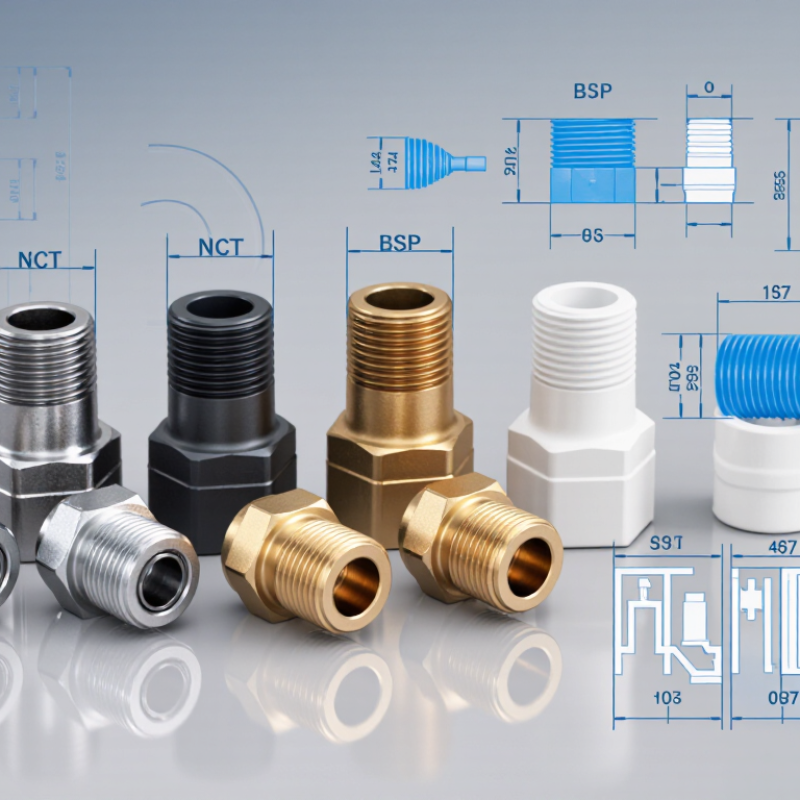
Table of Contents [Hide]
Define Threaded Couplers and Their Main Applications
Threaded couplers are short fittings that connect two threaded components. They usually contain internal threads, allowing rods, pipes, studs, or shafts to join securely. Some designs have external threads or different thread forms at each end. The correct coupler transfers load while maintaining alignment and service stability.
Their applications vary by industry. Construction teams use them to extend threaded rods, anchor assemblies, and reinforcing components. Plumbing systems use couplers to connect compatible pipes and fittings. Machinery often relies on them for shafts, fasteners, and adjustable linkages. Electrical installations may use threaded couplers with conduit systems. Material selection matters. Steel supports heavy loads, while stainless steel better resists moisture and corrosion. In one sourcing review, a small thread mismatch caused assembly delays, despite correct outer dimensions. That detail is easy to miss.
Tips: Confirm thread diameter, pitch, direction, and tolerance before requesting quotations. Do not assume regional thread standards are interchangeable. Ask for dimensional drawings, material certificates, load data, and sample inspection records. Check whether the coupler suits vibration, temperature, and corrosive exposure. A supplier may provide a polished sample, but production consistency still needs verification. Recheck the application with an engineer when loads are critical.
How to Choose Threaded Couplers for Global Sourcing - Define Threaded Couplers and Their Main Applications
A threaded coupler is a fitting with internal and/or external threads used to join two threaded pipes, tubes, hoses, or components. Selection should be based on thread compatibility, service conditions, material, sealing method, and applicable standards.
| Selection Dimension | Common Option or Standard | Key Technical Characteristics | Typical Applications | Global Sourcing Consideration |
|---|---|---|---|---|
| Definition and function | Female-to-female, male-to-male, or male-to-female threaded coupler | Joins two threaded components and may provide a straight, reducing, or directional connection | Pipe extensions, equipment connections, hose assemblies, instrumentation, and maintenance repairs | Confirm the required thread gender, nominal size, end-to-end length, and connection configuration before ordering |
| NPT pipe thread | ASME B1.20.1 National Pipe Taper | Tapered thread with a 60° thread form; sealing normally requires a suitable thread sealant | Industrial air, water, oil, hydraulic auxiliary lines, and general process piping | Do not assume NPT is interchangeable with BSPT or BSPP; verify the standard and nominal size separately |
| BSPT pipe thread | ISO 7-1 tapered pipe thread | Tapered 55° Whitworth-form thread designed for pressure-tight joints on the thread | Water systems, plumbing, compressed air, process equipment, and industrial machinery | Request the thread designation in writing because BSPT and NPT can appear similar while having different geometry |
| BSPP pipe thread | ISO 228-1 parallel pipe thread | Parallel 55° Whitworth-form thread; sealing is typically achieved with an O-ring, bonded seal, washer, or gasket | Hydraulic components, valves, gauges, manifolds, and equipment ports | Specify the sealing interface and seal material along with the thread; the thread alone may not create the seal |
| Metric thread | ISO 261 and ISO 262 coarse or fine metric thread | 60° thread form identified by nominal diameter and pitch, such as M12 × 1.5 | Machine frames, automotive equipment, instruments, mounting hardware, and metric tube or component connections | Always state both diameter and pitch; an identical diameter with a different pitch is not a compatible connection |
| Material selection | Carbon steel, stainless steel, brass, ductile iron, aluminum, or engineering polymer | Material affects corrosion resistance, mechanical strength, temperature capability, weight, and cost | Water, fuel, chemicals, compressed gas, food-processing equipment, outdoor systems, and general machinery | Request the exact material grade, surface treatment, and applicable material certificate when traceability is important |
| Connection geometry | Straight coupler, reducing coupler, hex coupler, union-style coupler, or adapter | Geometry determines alignment, serviceability, installation clearance, and whether different sizes or thread standards can be connected | Pipe joining, component replacement, branch connections, size transitions, and confined installation spaces | Provide a dimensional drawing showing thread ends, overall length, outside diameter, and wrench flats |
| Pressure and temperature | Application-specific pressure and temperature rating | The allowable rating depends on thread design, material, wall thickness, sealing method, fluid, and installation quality | Hydraulic circuits, pneumatic systems, steam-related services, chilled water, and process lines | Never use a nominal size as a pressure rating; obtain tested or documented ratings for the complete assembly |
| Fluid and compatibility | Water, air, oil, fuel, refrigerant, chemical media, or inert gas | The body material, plating, lubricant, and seal must resist the operating medium and environmental exposure | Utilities, chemical handling, refrigeration, fuel systems, laboratories, and manufacturing equipment | Provide fluid composition, concentration, pressure, temperature, and exposure conditions during supplier evaluation |
| Quality verification | Dimensional inspection, thread gauge inspection, leak testing, material verification, and visual inspection | Verification confirms thread accuracy, surface quality, sealing performance, and consistency between production batches | Safety-critical assemblies, repeat production, replacement parts, and export shipments | Define inspection points, sampling level, documentation, packaging, and acceptance criteria in the purchase specification |
Important compatibility rule: Threaded couplers should be matched by thread standard, nominal size, pitch or threads per inch, gender, sealing method, material, and service rating. NPT, BSPT, BSPP, and metric threads should not be treated as interchangeable without a specifically designed adapter.