-
PRODUCTS & SERVICESOptimized cooling solutions for modern data centersProducts & ServicesOptimized cooling solutions for modern data centers
-
CAPABILITIESAdvancing liquid cooling technologiesCapabilitiesAdvancing liquid cooling technologies
-
TechnologiesLiquid Cooling InnovationTechnologiesLiquid Cooling Innovation
-
RESOURCESLatest News & InformationResourcesLatest News & Information
-
ABOUTOur history, leadership and ownershipAboutOur history, leadership and ownership
-
CONTACTFacility locations and global operational footprint






How to Choose the Best Water Tank Filter?
Choosing the right Water Tank Filter is not simply a matter of picking the finest-looking product. The filter must match your tank, water source, household demand, and maintenance ability. A rainwater tank may contain leaves, dust, insects, and fine sediment. A household storage tank may face different problems, including rust particles, unpleasant odors, or microbial concerns. Each issue requires a different filtration approach.
Begin by examining the water before choosing equipment. Hold a clear glass under the tap and observe its color, particles, and smell. Then check the tank’s capacity, inlet size, outlet flow, and available installation space. A filter with a very fine micron rating can improve clarity, but it may reduce water pressure and clog quickly. A larger system may perform better, yet it often costs more and needs careful cleaning. Specifications matter.
Do not assume every filter makes water safe to drink. Some products remove sediment but cannot disinfect harmful microorganisms or eliminate dissolved chemicals. Look for transparent performance data, appropriate certifications, replaceable cartridges, and clear maintenance instructions. Reliable manufacturers should explain testing methods and expected service life. In real installations, neglected filters become dirty restrictions, not dependable protection. A perfect choice rarely exists. The practical choice balances water quality, flow, budget, and maintenance habits. Even experienced users can overlook seasonal changes, especially after heavy rain or long periods without tank cleaning. A thoughtful selection process helps prevent those mistakes.
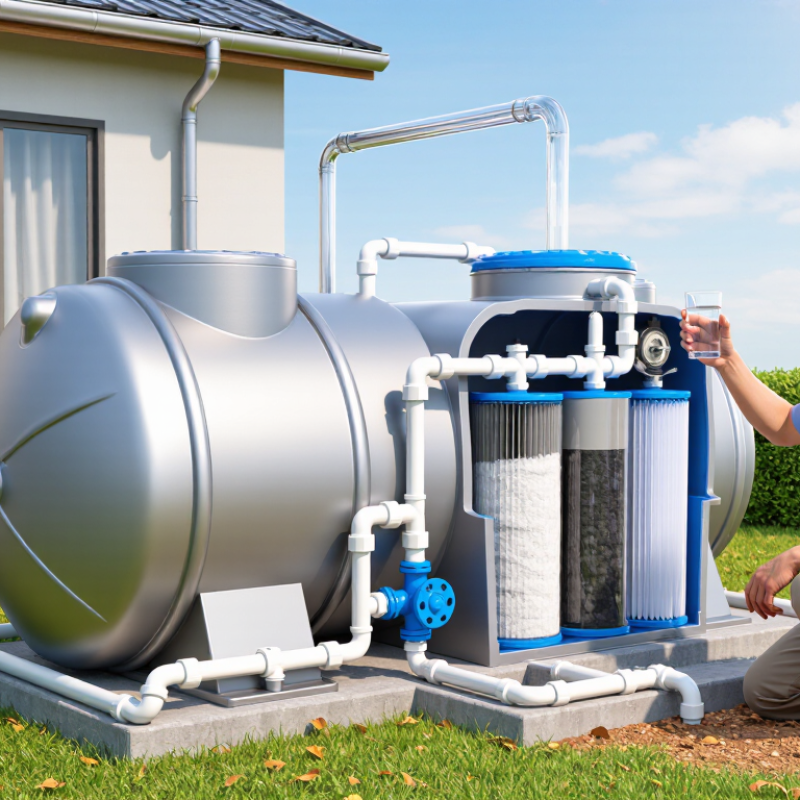
Table of Contents [Hide]
Assess Source Water: EPA Turbidity Benchmarks of 0.3 and 1 NTU
How to Choose the Best Water Tank Filter?
Assess source water before choosing a tank filter. Turbidity measures suspended particles, not every contaminant. EPA’s Surface Water Treatment Rules use 0.3 NTU as a strict performance benchmark. Conventional or direct filtration systems should meet it in at least 95% of measurements. Turbidity should never exceed 1 NTU. These figures describe treated public water systems, not a guaranteed household tank standard. Still, they provide a practical reference.
A tank receiving roof runoff may collect dust, pollen, insects, and fine sediment. Well water can carry iron particles or disturbed soil. I once treated a clear-looking sample as safe. That was a poor assumption. Clear water can still contain microorganisms or dissolved chemicals. Use a calibrated turbidity meter, and test after heavy rain, tank cleaning, or pipe repairs. The EPA’s Revised Total Coliform Rule also supports routine microbial monitoring, because appearance cannot confirm safety. WHO drinking-water guidance notes that lower turbidity helps disinfectants work more reliably.
Tips: Record several readings, not one. If turbidity approaches 0.3 NTU, consider finer sediment filtration. If it reaches 1 NTU, inspect the tank, inlet screen, and settled sludge before selecting replacement media. A filter rated for particles alone may not address pathogens or dissolved pollutants. That limitation deserves attention. The best choice depends on source testing, flow rate, maintenance habits, and verified treatment claims.