-
PRODUCTS & SERVICESOptimized cooling solutions for modern data centersProducts & ServicesOptimized cooling solutions for modern data centers
-
CAPABILITIESAdvancing liquid cooling technologiesCapabilitiesAdvancing liquid cooling technologies
-
TechnologiesLiquid Cooling InnovationTechnologiesLiquid Cooling Innovation
-
RESOURCESLatest News & InformationResourcesLatest News & Information
-
ABOUTOur history, leadership and ownershipAboutOur history, leadership and ownership
-
CONTACTFacility locations and global operational footprint


How to Choose the Best Carding Machine for Your Business?
Choosing the right Carding Machine can shape your product quality, operating costs, and production stability. The decision is not simply about buying the largest machine. Fiber type, target output, workshop space, maintenance skills, and future expansion all matter. A compact machine may suit a small wool operation, while a high-throughput cotton mill needs stronger feed control and advanced cleaning systems.
Textile machinery author Peter Lord describes the card as “the heart of the spinning mill.” This observation remains practical today. A well-adjusted Carding Machine opens fibers evenly, removes unwanted particles, and forms a consistent web. Poor settings can create neps, uneven sliver, excessive waste, or frequent stoppages. These problems often appear beside the machine, not inside a sales brochure.
Look closely. Measure twice.
This guide compares key machine types, cylinder speeds, working widths, production rates, energy use, and safety features. It also explains how to assess suppliers through factory demonstrations, service records, spare-parts availability, and operator training. A realistic trial with your own fiber is especially valuable. Specifications can look impressive, yet actual performance may change with moisture, staple length, contamination, and operator experience. We will also consider overlooked details, such as cleaning access, noise levels, adjustment time, and the space needed around inspection doors. No machine is perfect. The best choice is the one that matches your materials, people, budget, and verified production goals.
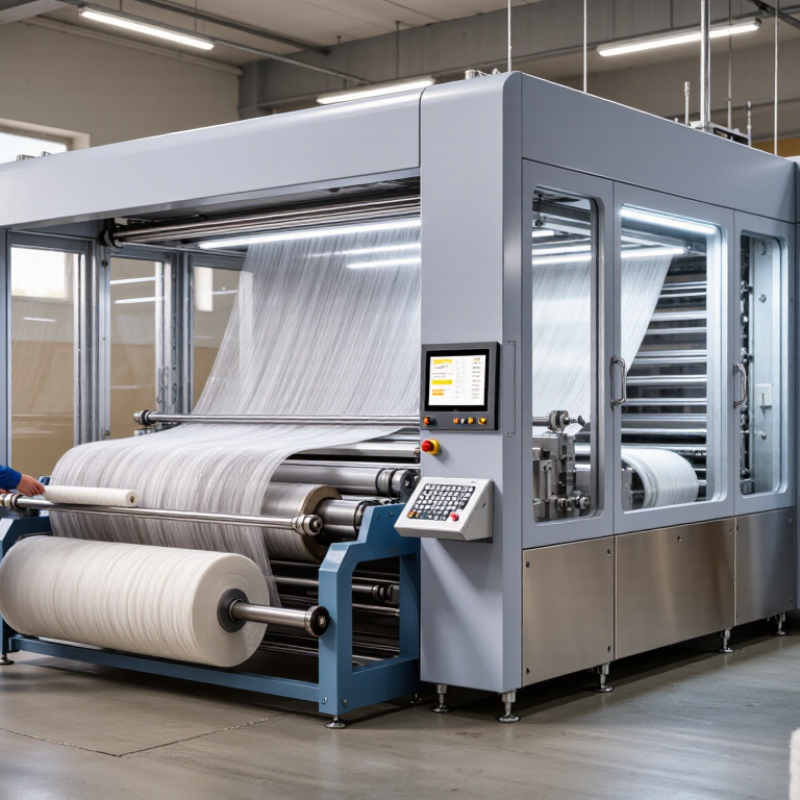
Table of Contents [Hide]
Define Your Business’s Carding Requirements
Before comparing carding machines, define the fibers your business will process. Record fiber length, fineness, moisture, blend ratio, and contamination level. Cotton, wool, recycled fibers, and synthetic blends behave differently during opening and carding. A machine that performs well with clean cotton may struggle with short recycled fibers.
Measure your expected production volume, not your ideal target. Note kilograms per hour, operating hours, batch sizes, and acceptable waste. Quality requirements matter equally. Specify web uniformity, nep reduction, fiber alignment, and allowable thickness variation. Ask suppliers for test data using your own material. Factory demonstrations can look impressive, but your feedstock may behave differently.
Consider the working environment carefully. Check available floor space, electrical capacity, dust control, noise limits, and operator access. Maintenance should be practical. Inspect card clothing, cleaning zones, adjustment points, and spare-part availability. I have seen production delays caused by small access problems rather than major mechanical failures. That detail is easy to miss.
Do not ignore operator experience. A highly adjustable machine may require skilled technicians and careful daily records. Simpler controls can be more reliable for a small team. Still, that is not always better. Trial runs should compare output, energy use, waste, downtime, and finished-fiber quality. Record the results honestly, including weak points. Your requirements may change after testing. That is useful information.
How to Choose the Best Carding Machine for Your Business? — Define Your Business’s Carding Requirements
| Business Requirement | Key Question | Typical Planning Range | Recommended Carding Machine Requirement | Why It Matters | Priority |
|---|---|---|---|---|---|
| Production Capacity | How much finished web or sliver must be produced per hour? | Small workshop: 20–80 kg/hour Medium operation: 80–250 kg/hour Large operation: 250 kg/hour and above | Choose a machine whose rated output exceeds the target by approximately 15–25% to allow for fiber variation, cleaning, maintenance, and production changes. | A machine that is too small can create bottlenecks, while excessive capacity may increase capital and operating costs unnecessarily. | High |
| Fiber Type | Which raw materials will be processed? | Natural fibers such as cotton, wool, flax, and hemp; regenerated fibers such as viscose; synthetic fibers such as polyester and polypropylene; or blends. | Select adjustable feed, taker-in, cylinder, worker, and doffer settings. Fine or delicate fibers require gentler settings, while coarse fibers may require stronger opening and cleaning action. | Fiber length, fineness, crimp, moisture, and contamination level directly affect carding quality and machine settings. | High |
| Product Application | What will the carded material be used for? | Spinning preparation, nonwoven webs, wadding, insulation, filtration media, geotextiles, automotive textiles, or hygiene products. | For spinning, prioritize uniform sliver and fiber orientation. For nonwovens, prioritize web uniformity, width control, and compatibility with cross-lapping or bonding equipment. | The required carding configuration depends on whether the final product needs sliver, a web, high loft, strength, filtration performance, or dimensional stability. | High |
| Working Width | What usable web or sliver width is required? | Common industrial working widths range from approximately 1,000 mm to 3,000 mm, depending on the application and production line. | Match the working width to the downstream process. Allow sufficient edge trim or adjustment capacity without selecting a significantly oversized machine. | Working width influences line layout, production capacity, web uniformity, and compatibility with subsequent equipment. | High |
| Quality Target | How consistent must the output be? | Evaluate web weight, sliver linear density, fiber orientation, nep level, cleanliness, thickness variation, and tensile performance. | Look for stable feed control, precise gauge settings, effective waste removal, suitable card clothing, and measurement points for routine quality checks. | Consistent output reduces downstream defects, material waste, customer complaints, and production interruptions. | High |
| Raw Material Condition | Will the feedstock be clean, recycled, oily, damp, or highly contaminated? | Virgin fibers generally require less intensive cleaning. Recycled fibers may contain dust, short fibers, hard points, or foreign materials. | Specify suitable pre-opening, dust extraction, waste collection, contamination removal, and cleaning access. Recycled fiber lines may require more robust opening and cleaning stages before carding. | Raw-material variation affects card loading, clothing wear, dust emissions, waste percentage, and maintenance frequency. | High |
| Automation Level | How much manual adjustment and supervision can the operation support? | Manual or semi-automatic control for small operations; recipe management, sensors, alarms, and closed-loop control for larger or quality-sensitive operations. | Consider automatic feed regulation, speed synchronization, touch-screen controls, fault alarms, remote diagnostics, and data logging when consistent production is essential. | Automation can improve repeatability and reduce operator workload, but it increases initial investment and service requirements. | Medium |
| Available Floor Space | Can the facility accommodate the machine and its complete production line? | Plan for the card, feed system, delivery section, dust extraction, electrical cabinet, access aisles, and material handling routes. | Confirm machine length, width, height, service clearances, floor loading, doorway dimensions, ceiling height, and future expansion space before ordering. | Insufficient space can restrict maintenance access, create safety risks, and prevent efficient material flow. | High |
| Utilities | Are the required electrical, ventilation, and compressed-air systems available? | Requirements vary by machine configuration, production rate, fiber type, and dust-control design. | Verify electrical voltage and frequency, installed power, dust extraction airflow, compressed-air quality, grounding, and ventilation requirements with the machine specification. | Utility limitations can reduce performance, increase fire and dust risks, or delay installation and commissioning. | High |
| Energy Efficiency | How important are operating costs and energy consumption? | Compare installed motor power, actual operating load, extraction requirements, idle-mode consumption, and expected annual operating hours. | Prioritize efficient motors, variable-frequency drives, automatic standby functions, optimized airflow, and properly sized dust extraction. | Energy use is a recurring cost and can significantly affect the total cost of ownership over the machine’s service life. | Medium |
| Maintenance Capability | Does the business have trained technicians and spare-parts support? | Basic operations need routine cleaning and adjustment skills. Continuous production requires planned maintenance, replacement clothing, bearings, belts, sensors, and electrical support. | Choose accessible machine sections, clear maintenance instructions, standard wear parts, condition monitoring, and a practical spare-parts plan. | Maintenance capability affects uptime, output quality, safety, and the long-term value of the equipment. | High |
| Safety and Dust Control | How will airborne fibers, dust, noise, and moving components be controlled? | Requirements depend on fiber type, contamination level, local regulations, and the overall line design. | Include guarding, emergency stops, interlocks, fire detection where appropriate, effective dust extraction, grounding, noise controls, and documented operating procedures. | Proper safety and dust control protect employees, reduce fire and explosion risks, and support regulatory compliance. | High |
| Budget and Payback | What investment can the business support without compromising essential performance? | Assess total installed cost, including machine, feed equipment, extraction, electrical work, installation, training, spare parts, and building modifications. | Compare alternatives using total cost of ownership rather than purchase price alone. Estimate labor, energy, maintenance, waste, expected output, and revenue contribution. | The lowest purchase price may result in higher operating costs, more waste, lower quality, or limited production capacity. | High |
| Future Expansion | Will production volume, fiber range, or product mix change? | Consider expected growth over the next three to five years, including additional shifts, new fibers, wider webs, and downstream equipment. | Select a modular configuration with adjustable speeds, suitable control capacity, expansion-ready utilities, and compatibility with future line additions. | Planning for growth can prevent premature replacement and reduce disruption when demand increases. | Medium |
Planning ranges are general industry guidelines. Final machine specifications should be confirmed through fiber trials, product testing, facility checks, and a detailed technical proposal.