-
PRODUCTS & SERVICESOptimized cooling solutions for modern data centersProducts & ServicesOptimized cooling solutions for modern data centers
-
CAPABILITIESAdvancing liquid cooling technologiesCapabilitiesAdvancing liquid cooling technologies
-
TechnologiesLiquid Cooling InnovationTechnologiesLiquid Cooling Innovation
-
RESOURCESLatest News & InformationResourcesLatest News & Information
-
ABOUTOur history, leadership and ownershipAboutOur history, leadership and ownership
-
CONTACTFacility locations and global operational footprint






How to Choose a P10 LED Panel in 2026?
Choosing a P10 Led Panel in 2026 starts with the viewing conditions, not the price tag. A 10-millimeter pixel pitch is commonly suited to signs viewed from a distance, such as roadside displays or large venue screens. It may look less detailed up close. Measure the usual viewing distance and screen dimensions before comparing products. Then consider ambient light: a bright, sunlit location places different demands on the display than a covered entrance. Small details matter.
A reliable comparison should cover brightness, refresh rate, cabinet protection, power use, and maintenance access. Ask suppliers for current datasheets, warranty terms, and evidence from comparable installations. Check that the sending controller and receiving cards work with the proposed panel. Confirm how replacement modules are sourced. A low initial price can be appealing, but difficult servicing may cost time later. No single specification tells the whole story.
Think about installation, too. Will the structure support the cabinets, and can technicians reach the rear for service? For outdoor use, verify the stated protection rating for the actual exposure; do not assume every P10 model handles rain or dust equally. Request a live demonstration when possible. Look at colors, motion, and text from the real viewing distance. Even a careful checklist leaves trade-offs. That is worth admitting. The best P10 LED Panel is the one that fits the site, content, and support plan—not simply the one with the biggest brightness figure.
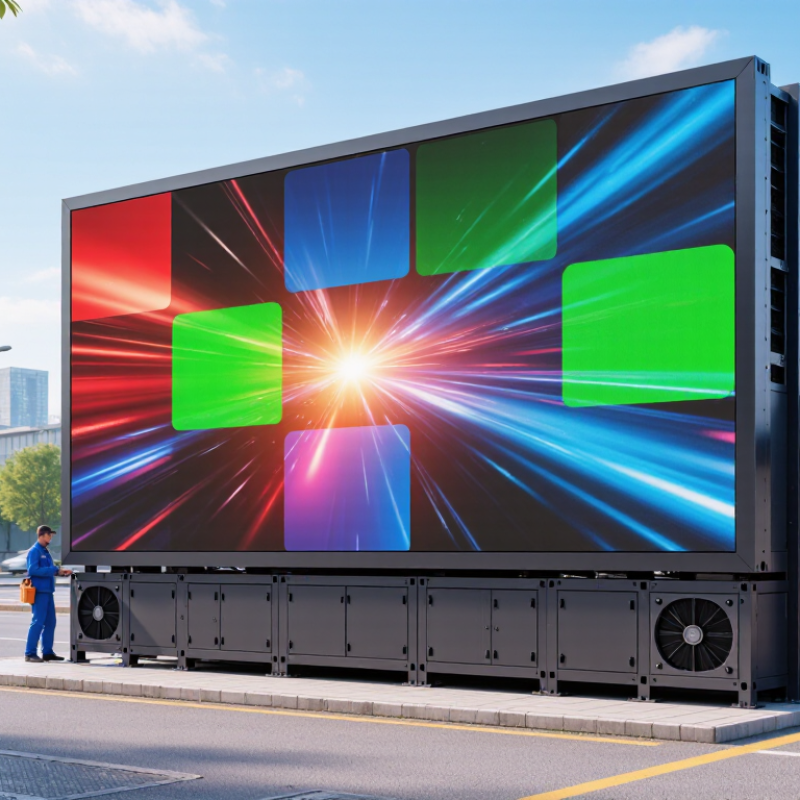
Table of Contents [Hide]
Define P10 Pixel Pitch: 10 mm Spacing Equals 10,000 Pixels/m²
A P10 LED panel has 10 millimeters between the centers of neighboring pixels. Across one meter, that allows 100 pixels horizontally and 100 vertically, giving 10,000 pixels per square meter. This is a geometric calculation, not a promise of sharp text at every distance. A two-meter-wide panel, for example, has about 200 pixel columns; tiny lettering may look coarse up close. Pixel count also does not reveal brightness, contrast, refresh rate, or viewing-angle performance.
For practical screen sizing, AVIXA’s Display Image Size for 2D Content in Audiovisual Systems (DISCAS) standard considers viewing distance and image detail. Use it alongside the pitch calculation: stand where viewers will actually stand, then inspect fine text and moving content. The number looks reassuringly exact. Real venues are messier.
Tips: Mark a 10 mm grid on paper, or view a sample panel from the intended distance. Check whether signs remain readable in daylight and whether camera footage shows flicker. P10 may suit distant viewing, but that judgment deserves a site test, not a guess.