-
PRODUCTS & SERVICESOptimized cooling solutions for modern data centersProducts & ServicesOptimized cooling solutions for modern data centers
-
CAPABILITIESAdvancing liquid cooling technologiesCapabilitiesAdvancing liquid cooling technologies
-
TechnologiesLiquid Cooling InnovationTechnologiesLiquid Cooling Innovation
-
RESOURCESLatest News & InformationResourcesLatest News & Information
-
ABOUTOur history, leadership and ownershipAboutOur history, leadership and ownership
-
CONTACTFacility locations and global operational footprint






2026 Top Aluminum for Machining Which Grade Is Best?
Choosing the right Aluminum For Machining grade can determine whether a part runs smoothly or becomes an expensive rework project. In 2026, manufacturers still compare 6061-T6, 7075-T6, 2024-T3, 6063, and 5083 for different production demands. Each alloy changes cutting behavior, strength, surface quality, corrosion resistance, and final cost. The best choice depends on the part, not the label.
6061-T6 remains a practical starting point for brackets, housings, fixtures, and general CNC components. It machines reliably and offers balanced strength with good corrosion resistance. 7075-T6 provides higher strength for aerospace-style structures, tooling, and stressed components. However, it can cost more and may need careful tool selection. 2024 can cut well, but its lower corrosion resistance requires additional protection in exposed environments. 6063 delivers attractive finishes, yet it is usually less suitable for heavily loaded parts.
Real workshop experience matters here. A sharp carbide tool, stable workholding, and controlled coolant can improve results across several grades. Still, no cutting strategy can fully correct a poor material decision. Tiny burrs around a drilled hole can reveal problems before final inspection. A shiny finish may look impressive, but it does not prove dimensional stability.
This guide compares each grade through machinability, strength, corrosion behavior, finish potential, availability, and cost. It also considers temper condition and supplier documentation, because alloy names alone are incomplete. A quick online chart may help, but it should not replace verified datasheets or a trial cut. There is no perfect aluminum grade. Only the most suitable compromise for the actual part.
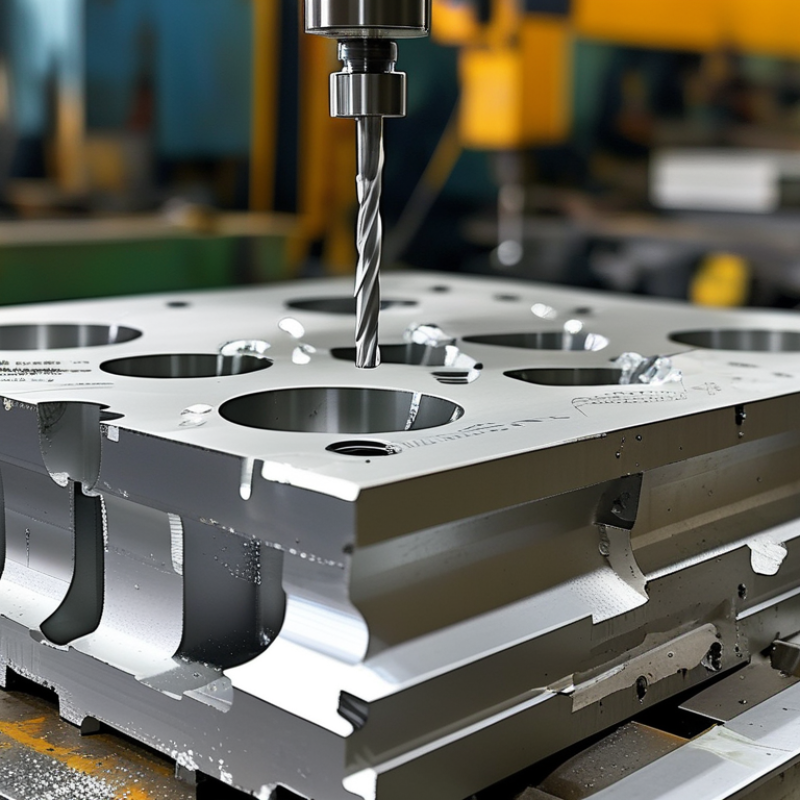
Table of Contents [Hide]
What Makes Aluminum Suitable for Machining?
What Makes Aluminum Suitable for Machining?
Aluminum is suitable for machining because it combines low density with useful strength. ASM Handbook reports aluminum’s density at approximately 2.70 g/cm³, nearly one-third that of steel. That difference reduces machine load and makes large components easier to handle. It also supports faster movement between workstations.
Heat matters.
Many aluminum alloys conduct heat efficiently, with values commonly ranging from about 120 to 235 W/m·K, according to ASM technical data. Cutting heat can move away from the tool edge quickly. This helps maintain dimensional control during milling and turning. However, aluminum’s softness can create built-up edges. Sharp tools and controlled cutting speeds remain essential.
The best grade depends on the part.
A 6061-type alloy offers a practical balance of machinability, strength, corrosion resistance, and availability. A 7075-type alloy provides higher strength, but it may cost more and demand stricter tool control. Free-machining alloys can produce cleaner chips and smoother surfaces, though they may sacrifice some structural performance.
In my experience, chip evacuation often matters more than a brochure suggests. A well-chosen grade still fails when chips pack inside a narrow pocket.
Material data from the Aluminum Association and ASM Handbook supports these trade-offs, but shop trials should confirm them. General rules are useful. They are not final answers.